Welcome to the Bridge to Freedom Foundation Blog


Thank you for visiting the Bridge to Freedom Foundation (BTFF) blog, where we look forward to bringing you inside information on the inner-workings of BTFF, inside information on our volunteer team and leadership, in-depth coverage of BTFF and partner events, news and happenings from across the globe and so much more.

Learn more about Bridge to Freedom Foundation and how you can help on the BTFF website. We do hope you will subscribe to and follow our blog and please e-mail us at blog@btff.org if you have any feedback, ideas or contributions.

Thank you for your support!
Cassandra Clifford
Executive Director and Founder of BTFF
Showing posts with label domestic minor sex trafficking. Show all posts

Wednesday, November 13, 2013

Tips for Law Enforcement to Efficiently Detect, Prevent, and Deter Human Trafficking


  1. Train personnel on the indicators of human trafficking and on effective interviewing of potential victims who, in most cases, do not self-identify. 
  2. Educate the public about human trafficking and concentrate on the vulnerable populations of the community. 
  3.  Develop government and non-government partnerships to achieve a unified enforcement action against human trafficking while providing aftercare for the victims. 
  4. Collect information and intelligence to identify the criminal networks, traffickers, persons of interest, locations, and financial aspects involved in the illegal trafficking operations. Investigate those people and locations linked to human trafficking and explore prosecution for any subsequent crime. 
  5. Target high risk areas for human trafficking to better utilize limited resources while tracking and assessing activity and enforcing laws. 
  6. High risk areas include brothels, strip clubs, escort services, and massage parlors. 
  7. Use proactive enforcement during the peak hours in and around locations linked to human trafficking.
  8. Develop informants from individuals who are arrested and use the information to further the investigation into trafficking networks. 
  9. Explore the use of modern technology and science to aid in the investigation, evidence collection, and prosecution efforts. 
  10.  Seize assets to hinder and disrupt individuals and organizations involved in human trafficking. Prosecute the defendants and publicize success stories. 

 Read more: http://communities.washingtontimes.com/neighborhood/speaking-out/2013/oct/30/ten-tips-law-enforcement-decrease-human-traffickin/#ixzz2kYi7fuev

Wednesday, November 6, 2013

Demand Change in the Heartland


It is with great pleasure that I was able to travel to Kansas City, Missouri in October to not only conduct Violence Prevention Workshops, but to attend the Demand Change in the Heartland Conference. The conference was hosted by Veronica's Voice and featured a survivor only led panel. This amazing panel of determined, courageous, inspiring and spirited group of fighters not only shared their stories, but more importantly focused on the hurdles that victims and survivors face on the road to recovery and to lead thriving lives.

Veronica's Voice's, Demand Change Conference truly amazed me in so many ways that I don't think I can even share enough with you.  I was immediately awoken from my early morning daze and incredibly proud of the power of change that begun to kick off in the early morning on a a Saturday in America's Heartland -and my hometown.  Hometown pride has a whole new meaning now...as does the true unbreakable spirit of a Midwestern girl -no one can hold a flame to the ladies that sought to bring this house down!

As an organization that is newer and who's mission is to bring those victimized by modern slaver from a point of surviving to thriving, I personally and professionally see survivor informed services as the only way forward.  Bridge to Freedom Foundation is about the future not the past, and while we may hear many survivor stories along the way we let the survivor lead and never ask, "what happened", therefore this conference held a great deal of meaning for us and sought to ensure we continue to learn and grow from the survivor community.  BTFF strives to ensure we never forget who it is we work for and why.  Kristy Childs Founder and Director of Veronica's Voice, ut it best; "Let survivors share their story and what they want to share. Be mindful, have compassion without the details. That is dignity!.  Childs also added, "...when we see some as worthy victims an others as unworthy, we are causing great harm."

One of the day's key topics was the re-victimization of victims and the labeling placed on them, including that treating and arresting as criminals and using victimizing words such as "prostitute".  "Prostitution is an extension of slavery" added Vednita Carter of Breaking Free.  Many survivors have criminal records, including felonies following arrests for prostitution charges and vacating such crimes is not easy nor possible in call states.   Tina Frundt, Founder and Executive Director of Courtney's House broke down the harsh realities of labeling and the continual harm it causes as she spoke with unfiltered dynamism; "...what now at 20...22...I'm worth nothing because you didn't help me at 9?"

The harsh reality so many do not want to face or turn a blind eye to was not swept under the rug and even if you wanted to turn a blind eye you were too paralyzed to do so as the rooms power, inspiration, passion and leadership took you in and the heartfelt and intimate stories of the survivors took hold of you.

Brenda Myers-Powell , Founder of the Dream Catcher Foundation, spoke about her journey with a vibrancy and yet painstakingly sharp honesty that one so rarely hears on any stage; This was "...not something I got into it was something I was almost born into... All I waned to do was be shinny, but the shine kept getting taken away from me teach time I was molested."   Myers-Powell was not alone on this stage sharing often painful intimate details of their path from victim, survivor to a empowered thriving woman, and all of these remarkable leaders filled the room with the loudest voices of truth one can find.  Christine McDonald, who's book "Cry Purple", is one of the most heartwarming stories of courage, survival and triumph; showed that innocence does not have to be lost as she infected the room with her contagiously sweet laugh in the midst of telling stories that would have broke so many before they began.

The event put forward so many valuable lessons in a frank and feasible manner, that makes one question why we have not been talking like this (or listening) and resolving these issues all along.  Survivor informed and led services are key to breaking the cycle and ensuring that those abused by the chains of human trafficking are enabled to lead thriving lives with dignity.  "We need to be more than well- intended, we must be intentional!" stated, Dr. Karen Countryman-Roswurm.  Intention to see one thrive and lead their own journey requires many steps and all must be informed, as Rowena Mathews, Alumni Member of Breaking Free stated; "We need a lot of little things before we are able to walk on our own."

 The event even hosted a powerful dance performance;  "The Game" by Erin Murphy, featuring the words and stories of survivors from Veronica's Voice.  Like the performance this conference was truly a one of a kind inspirational event that drives you to act in an intentional and sustainable manner with the survivors needs at the center of it all.

Friday, November 1, 2013

Fact: Domestic Violence and Human Trafficking Often Happen to the Same Victim


We have quickly been flying through the Fall season, also the season football and awareness months. October is, was, Domestic Violence, established in 1995 when several organizations, including the Family Violence Prevention Fund and the National Coalition Against Domestic Violence united to raise awareness against this growing -and most often silenced- problem.

Why is a human trafficking organization talking about domestic violence? Human trafficking and domestic violence can occur on a continuum of violence, and the dynamics involved in human trafficking are frequently interwoven with those of domestic violence. This occurs mo Individuals who have suffered violence and discrimination in their countries of origin based on their sex, gender identity, sexual orientation, or dysfunctional family situations are often more likely to overlook the risks of unsafe migration, thus increasing their vulnerability to human trafficking. Traffickers also frequently exploit the already lowered self-esteem of trafficking victims who have experienced abusive family lives. Conversely, trafficking survivors are often vulnerable to future incidences of domestic violence.

The following are examples of cases where domestic violence and human trafficking can manifest together on the basis of the same set of facts:

  1. Involuntary servitude in marriage: Cases where traffickers force their spouses to perform services and labor, such as domestic work, working at family businesses, or sex work. These traffickers may also physically and sexually abuse their spouses, as well as threaten them with immigration and legal consequences. 
  2. Forced prostitution and sex work: Cases where individuals are recruited into sex trafficking by traffickers feigning love interest in them. The cases may involve fraudulent courtship, sexual assault, and then a distinct pattern of domestic violence to control or convince the victims to engage in sex work. 
  3. Other forced labor: Cases where individuals are trafficked by other family members (besides in

Friday, October 11, 2013

International Day of the Girl Child

Today Bridge to Freedom Foundation (BTFF) is proud to celebrate the second annual International Day of the Girl Child. Enacted by the United Nations in 2011, this day offers an opportunity to highlight gender inequality and the fulfillment of human rights for all women and girls -including the elimination of violence.

The International Day of the Girl Child provides not only everyone at BTFF a greater platform to raise our voices and improve the lives of women and girls around the globe, but for you to join us and make your voice heard. It is that reason BTFF is proud to announce the launch of our Violence Prevention Program on this very special day dedicated to girls around the world. Please help us ensure that girls are not only able to lead thriving lives, but are able to walk through their daily lives aware and empowered to fight against violence!

We hope you will join us in honoring the Day of the Girl Child, as well as October being Domestic Violence Prevention Month, by donating to our Violence Prevention / Self-Defense fundraising campaign.  Please click here to see how you can sponsor a free 3 hour workshop for a survivor.

Friday, October 4, 2013

FACT: A human trafficker can earn 20 times what he or she paid

A human trafficker can earn 20 times what he or she paid for a girl. Provided the girl was not physically brutalized to the point of ruining her beauty, the pimp could sell her again for a greater price because he had trained her and broken her spirit, which saves future buyers the hassle. A 2003 study in the Netherlands found that, on average, a single sex slave earned her pimp at least $250,000 a year (Skinner, E. Benjamin. 2008. A Crime So Monstrous: Face-to-Face with Modern-Day Slavery. New York, NY: Free Press).

Wednesday, October 2, 2013

Modern-Slavery News Round-Up

All Hands on Deck: Renewing the Call to Combat Human Trafficking Spet. 25: One year ago today, President Obama announced the Administration’s commitment to lead the fight against human trafficking during a seminal speech at the Clinton Global Initiative Annual Meeting. ...Over the past year, we’ve made great strides and increased our efforts in order to realize the President’s vision. However, we still have so much more to do. The President said in his remarks one year ago, “It ought to concern every person, because it is a debasement of our common humanity. It ought to concern every community, because it tears at our social fabric. It ought to concern every business, because it distorts markets. It ought to concern every nation, because it endangers public health and fuels violence and organized crime. I’m talking about the injustice, the outrage, of human trafficking, which must be called by its true name – modern slavery.”

Michigan: Human trafficking: 19-bill package aims to curb 'modern day slavery' in Michigan, help victims Michigan state Sen. Judy Emmons on Thursday unveiled a 19-bill package intended to crack down on human trafficking and offer help to victims of a crime that many call a form of "modern day slavery." The bipartisan package, to be formally introduced next week, features bills that would provide safe harbor for victims, eliminate the statute of limitations for trafficking offenses, allow victims to sue their captors and enable a prosecutor to utilize wire tapping while building a criminal case.

Florida: Statewide human-trafficking initiative focuses on children A new statewide initiative championed by Florida Attorney General Pam Bondi aims to end human trafficking by encouraging parents and children to discuss the dangers of talking to strangers online. The "From Instant Message to Instant Nightmare" crusade, unveiled Friday, includes billboards, mall displays and bus-shelter posters asking parents and children to educate themselves about sex traffickers who target children, tweens and teens online.

A Bold Plan to Aid Sex-Trafficking Victims As understanding of the cruel dynamics of sex-trafficking has grown in recent years, a consensus has emerged among criminal justice professionals that it makes more sense to treat people charged with prostitution as the exploited and abused victims a vast majority are, rather than as criminals. An important new initiative by New York State’s chief judge, Jonathan Lippman, aims to put that humane insight into practice. A handful of cities across the country, including Baltimore and Phoenix, have specialized courts that deal with sex-trafficking offenses. On Wednesday, Judge Lippman announced the creation of the nation’s first statewide system of specialized criminal courts to handle prostitution-related offenses and make services available to help sex-trafficking victims escape their abusive situations and forge new lives.

Monday, August 5, 2013

Modern Slavery News Round-Up

Former Child Trafficking Victim Now Mentors Others
Each week, Weekend Edition Sunday host Rachel Martin brings listeners an unexpected side of the news by talking with someone personally affected by the stories making headlines. Sheila White grew up in a troubled home. She was abused and ended up in foster care as a teenager. Not long after that, feeling low and confused, she met a man who soon became her pimp. During the years she was forced into sex work, White was exposed to extreme violence. But, she explains, some victims have a hard time leaving their exploiters. Read More

Human trafficking: Suburbs' dirty little secret
While other 7-year-olds were playing with dolls and going to summer camp, Amy was being prostituted on the streets of Texas, Virginia, and Oregon. By her grandfather. "It's happening right under everyone's nose," said John Kelleghan, special agent in charge of the U.S. Immigration and Customs Enforcement Office of Investigations in Philadelphia. The scale of the problem is huge - and it's not just a big-city problem. Unlike cities, where trafficked girls often are visibly on the streets working as prostitutes, in the suburbs, the problem is more discreet, said Kate Keisel, director of the national nonprofit Polaris Project's program in New Jersey. Trafficked women in suburbia are offered up for sex in ads on Internet sites. They often work in brothels advertised as "massage parlors." Read More

New French Laws Bans Mondern Slavery
France has recognized modern-day slavery as a new crime punishable by up to 30 years in jail. Previously courts were only able to convict suspects on other charges, such as taking advantage of vulnerable people, that carry lighter sentences. The bill, unanimously adopted by France's upper house, the Senate, on Thursday, means that anyone holding people against their will and making them work for free, will face between seven and 30 years in prison. Almost 21 million people around the world are currently victims of forced labor, according to the International Labor Organisation. French anti-slavery campaigners receive more than 200 reports of enslavement per year but believe that it is much more widespread, because it happens in private, often within families. Read More.

Modern-day slavery: Mira's story
Last week marked a key date in the history of slavery. The full emancipation of all slaves was legally granted on August 1, 1838, with the abolition of the apprenticeship system, which replaced slavery. The apprenticeship system meant slaves still had to work for their previous masters for a very low wage. Although full emancipation was granted 175 years ago, slavery isn't an issue just confined to the past. Certain characteristics distinguish slavery from other types of human rights violations, according to the Anti-Slavery human rights organisation. A slave is forced to work through mental or physical threat and is owned or controlled by an employer - usually through mental, physical or threatened abuse. They could be dehumanized treated as a commodity, physically constrained or have restrictions placed on their freedom of movement.  Read More.

Human smuggling - modern day slavery
Human trafficking is a horrific crime that subjects its victims to modern day slavery – forced labor – for little or no pay. According to the U.S. State Department, as many as 27 million men, women and children worldwide remain trapped as slaves by traffickers who strip away their dignity and basic human rights by preying on their vulnerabilities and exploiting them for involuntary labor and compulsory prostitution services. This horrendous crime touches victims across the globe – and right here in Texas. Read More.

Thursday, July 25, 2013

Report Highlights the Lack of Beds for Domestic Minor Victims of Sex Trafficking

On July 8, a briefing was held in Washington DC, to discuss the results of the National Colloquium on Shelter and Services for Domestic Minor Sex Trafficking Victims. The event was organized by Shared Hope International, and presented by Congresswoman Linda Smith, President and Founder. The live streamed event was held in coordination with Senators Portman and Blumenthal, Co-Chairs of the Senate Caucus to End Human Trafficking; Reps. Ted Poe and Jim Costa, Co-Chairs of the Congressional Caucus for Victims' Rights and Represenitives Jaime Herrera Beutler and Donna F. Edwards, Co-Chairs, and Reps. Kristi Noem and Doris O. Matsui, Vice-Chairs of the Congressional Caucus for Women's Issues. Participants discussed trends and obstacles in establishing treatment facilities for underage victims of sexual exploitation and trafficking.

The National Colloquium Report provides policy makers, government agencies, service providers, and law enforcement with an overview of current services and shelter delivery models. Due to the nature of the crime of commercial sexual exploitation of children, we all know that multiple systems interact with child victims and collaboration is critical among law enforcement, child welfare agencies, and other first responders.

Among the issues discussed was the current status of providers of shelter and victim services for youth victims of domestic minor sex trafficking within the United States, and the glaring lack of beds -there are currently only 226 beds available to youth victims of sex trafficking in the U.S. Also acknowledged were the community-based service providers, which, according to the report, can offer space for up to 1,684 minor victims of sexual exploitation. These numbers are an important indicator that the US has grown in the capacity to provide service to victims, but also have improvements to make. The Executive Director went on the address issues with services and shelters that were identified in the report, one being the geographical disparity between high-traffic areas and the locations of service providers.

The report shows that of practitioners providing direct services reported they receive referrals from juvenile probation from child protective services, and law enforcement. In addition, three national surveys for providers, survivors, and advocates and funders were developed and distributed and over 100 expert individuals and organizations completed the surveys. Responses were collected from 51 organizations, 33 survivors and 18 national advocacy and funding experts. The report includes 26 specific recommendations in 5 categories: Placement and services for identified youth, Licensing and maintaining shelter and programs, Identifying sustainable resources, Programmatic/therapeutic responses, and Safety and security recommendations

Click here to read the full report!

Tuesday, July 2, 2013

Commercial and Billboards in Texas Seek to Impact the Demand for Sex Trafficking


Earlier this year Huston, Texas based, Free the Captives, launched the “Reducing the Demand” campaign, targeting the Johns.  The campaign then went to work producing billboards and a Radio and TV commercial targeting Johns, who purchase sex, to highlight the realities of sex trafficking and debunk the myths that have continually plagued victims and advocates.  The PSA's are now up and beginning to air and; the video features, Sheriff Garcia, whose stern and strong presence makes it clear that men who purchase women and girls for sexual -or any other- purpose, will no longer be tolerated in Harris County, Texas.  Please watch the video PSA "Buyer BEWARE: You will be Arrested! (The Realities of Sex Trafficking)" Commercial and Billboards in Texas Seek to Impact the Demand for Sex Trafficking below:


These PSA's and billboards make it clear that when you buy sex you are fueling human trafficking, and we how to see more incentives like this sweeping the country.  

Texas has once again taken a great step in the state level fight to end national and global human trafficking.  More calls come from Texas to the National Human Trafficking Hotline than any other state, due to the great incentives put into place including the use of billboards and campaign efforts by Huston Rescue and Restore.  

The first step to ending human trafficking and modern slavery is to end demand!  Please share these resources to help open the eyes of others and see we put an end to the enslavement of innocent men, women and children once and for all.

Monday, February 11, 2013

Modern Slavery News Round-Up

International Tour Management Institute Signs Tourism Child-Protection Code of Conduct
At the International Tour Management Institute's (ITMI) 26th Annual Symposium, ITMI became the first travel and tourism institute to sign the Tourism Child-Protection Code of Conduct. Last year, ITMI incorporated human trafficking training into their curriculum. All graduates of the program are educated on the issue, the signs of trafficking, and empowered to report suspected incidences to the proper authorities.

UN Conference on the Rights of the Child gives concluding remarks on the Optional Protocol on the Sale of Children
The United Nations gave their concluding observations on the second periodic report of the United States of America to the Committee on the Rights of the Child on the Optional Protocol on the sale of children, child prostitution and child pornography, adopted by the Committee at its sixty-second session (14 January-1 February 2013), how the U.S can improve its protection of children covered under this protocol. The recommendations state how the U.S. government can do a better job in protecting children from sexual exploitation and come from a review of the government’s report and additional conversation and between the US and the UN Committee on the Rights of the child in January.

150 years after U.S. emancipation, slavery isn’t over
This January marked not only the 150th anniversary of the Emancipation Proclamation, but also the third annual National Slavery & Human Trafficking Prevention Month. The presidential proclamation began in 2011 as a way for the administration and human rights groups to raise awareness of what President Obama has called “a crime that amounts to modern-day slavery.“ There are more people living in bondage today than at any other time in human history. The market value of a trafficked human life has decreased from the equivalent of $40,000 in today’s dollars in the mid-nineteenth century American South, to about $90 today. The number of human trafficking cases in the U.S. has more than doubled since 2007, according to the FBI.

Apple's Child-Labor Problem Runs Deep
Apple has released its 2012 Supplier Responsibility Report, which claims to have found no underage workers in "any of our final assembly suppliers." But Apple's supply chain goes much deeper than that, and what the company found in the supply chain of its suppliers — the places that send Foxconn parts — came out less clean. "In many of the cases of underage labor we’ve discovered, the culprit behind the violation was a third-party labor agent that willfully and illegally recruited young workers," explains the report. In one plant that makes circuit-board components, Apple's auditors found 74 cases of workers 16-years-old and younger. Another huge labor agency, Quanshun Human Resources, forced parents of young children to forge papers in order to cover for its underage workers. While 95 percent of the factories Apple audited had no signs of child labor, the other 5 percent include more sordid stories.

King County of Seattle Displays Awareness of Human Trafficking on Its Billboards
In early February, King County of Seattle unveiled billboards that increase awareness of Human Trafficking along the Interstate-5 corridor, in Kent and Tukwila as well as Tacoma, Mill Creek and Bellingham. The ad space, donated by Clear Channel Outdoors, advertises a national hotline and message to reach out to victims, potential victims and the public about where to turn for help on its 15 electronic and traditionally displayed billboards. The ads, in eight languages, encourage people to call the National Human Trafficking Resource Center hotline at 1-888-3737-888 if they suspect someone may be a victim of human trafficking or if they are victims. Similar ads are being displayed on Metro Transit buses and on county websites and other resources. Clear Channel Media & Entertainment also airs public service announcements on their radio stations throughout the region as part of their $88,000 contribution to the awareness campaign.

Friday, February 8, 2013

Myths and Realities of Human Trafficking


The reality of Human Trafficking is that it occurs in nearly every country and its networks are vast and difficult to investigate. According to the United Nations, there are between 27 and 30 million slaves in the world. The U.S. State Department cites that 600,000 to 800,000 people are trafficked across borders every year, but these numbers are often under-reported and victims are usually hidden, meaning that real statistics are hard to substantiate. This also means that there is a vast amount of incorrect information out there, which fuels the myths about human trafficking.

The most common myths are listed below and are further discussed by a contributor to Forbes' The Daily Muse:
  1. Myth - Human Trafficking and Human Smuggling Are the Same
  2. Myth - Most Traffickers Are What the Movies Show You
  3. Myth - Human Trafficking Only Refers to Forced Prostitution
  4. Myth - Only Women Are Trafficked
  5. Myth - Everyone Trafficked is Kidnapped or Deceived
  6. Myth - Trafficking Only Happens in Other Countries, Not in the United States
While the quest to better understand human trafficking seems a formidable task, the more you learn the more you are armed with the facts to better educate yourself and others, while being better equipped to take action against this global problem that reaches to our very own neighborhoods.

Sources: Forbes, The Daily Muse, "Human Trafficking: The Myths and The Realities"

Monday, February 4, 2013

Sex Trafficking and the Superbowl


Last night was one of the biggest events of the year for American sports fans -and non-sports fans for that matter- as the Baltimore Ravens battled the San Francisco 49ers battled it out for Super Bowl XLVII. However as the Ravens worked to see their way into NFL history, countless people were the victims to the sex crimes - all directly associated with football’s biggest day.

America's biggest sporting event is also America's biggest day for sex trafficking. Only days before the Super Bowl XLVII, New Orleans police arrested eight people and rescued five women from a human-trafficking-related operation (Fox 8 News).  Busts such as this one are not only a small indicator to the large scale, but have now dubbed the sports event the “single-largest human-trafficking incident in the United States". Some 300,000 American women and children as young as 12 years old are sexually exploited each year. While it is possible for people to be abducted during the Super Bowl, most are likely taken beforehand and used at major, large-scale events like the Super Bowl.

Such incidents include the estimated 10,000 women and minors that were trafficked in the Miami area during the 2009 Super Bowl in Tampa, Fla., according to the Florida Commission Against Human Trafficking. The Tampa Bay Times provided details of a trafficker being arrested for offering two girls, one 14 and one 18, for $300 as "a Super Bowl special." The trafficker, Manuel A. Walcott, was apparently advertising the girls on Craigslist and was subsequently sentenced to 20 years in prison. The girls had been held captive as prostitutes for two years.

Texas Attorney General Greg Abbott told USA Today in 2011 -when his state hosted Super Bowl XLV- that; "The Super Bowl is the greatest show on Earth, but it also has an ugly underbelly," In 2011 while the Green Bay Packers defeated the Pittsburgh Steelers; 133 prostitution-related arrests were made that year.

Clemmie Greenlee, a survivor of sex trafficking,recounted in the New Orleans how she was taken to Southern cities to prostitute for those attending such large-scale events as the Super Bowl. She's sitting in the lobby of a New Orleans hotel, decorated with San Francisco 49ers and Baltimore Ravens decorations. Her pimps took advantage of the large influx of people who attended the Super Bowl to increase business by mandating 25 a day to Greenlee and their other victims. If they didn't make the quotas they were severely beaten, raped, or forced to watch another girl receive the punishment. Now 53, Greenlee works at Eden House in Uptown New Orleans, the first shelter for sex-trafficking victims in Louisiana; the center opened in October 2012.

This year in preparation for the the Super law enforcement agencies and advocacy groups collaborated with local businesses in order to spread awareness. One such group of volunteers and coalition members, Klaas Kids travel to each Super Bowl to investigate the sex trafficking. They often find young girls, some who were reported missing. According to Brad Dennis, Klaas Kids search director, as many as "2,200 children are reported missing every day in the United States. That`s an awful lot of kids on the streets for predators to take advantage of..." and the primary reason they target Super Bowls for their investigations (Fox).  He and Nita Belles, who began work after researching human trafficking for her book ‘In Our Backyard,’ along with other members split up into groups searching through neighborhoods from New Orleans to Biloxi, MS. They`re sending information to joint task forces in both states. Biloxi Police Sgt. Aldon Helmert says, “when we`re able to have citizens to be our eyes and ears, it provides us a great deal more resources.” The investigations have led to at least 15 rescues with one of the girls had been reported missing.

Large scale awareness campaigns such as the USA Today  full page ad promoting the End It Movement -an anti-human-trafficking campaign launched at the 2013 Passion Conference, in accordance with the Super Bowl. The A 21 Campaign, established in 2008, released several Super Bowl-related info-graphics -such as the one shown above- about human trafficking this year.


Tuesday, December 4, 2012

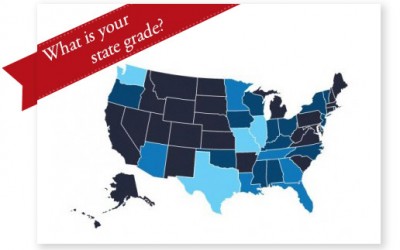
What Grade Did your State Get for Bringing Justice to Victims of Sex Trafficking this Year?


The fight against modern slavery is global and effects every race and age, however those most at risk for exploitation are children, including those right here at home. Despite great efforts and awareness all too many eyes remain closed to the realities of modern slavery and the innocent victims it holds in it's relentless grasp. One child victimized by the unspeakable acts of sexual exploitation and human trafficking is too many. Nonetheless every year in the United States, experts estimate at least 100,000 children -that is some 274 children a day- are exploited in the U.S. commercial sex industry. The average age of a child when they are first sexually exploited through prostitution is only 13 years old.

Last week on, On November 29, Shared Hope International released its 2012 Protected Innocence Challenge. “The Protected Innocence Challenge is a comprehensive study on existing state laws designed to inspire and equip advocates. Under the Challenge, every state receives a Report Card that grades the state on 41 key legislative components that must be addressed in state’s laws in order to effectively respond to the crime of domestic minor sex trafficking. In addition, each state receives a complete analysis of this 41-component review and practical recommendations for improvement.

DID YOUR STATE MEET THE GRADE?
Sadly no States received an A and more States received an F than any other grade, with nearly as many coming in with a D, it has left us with 69% of our States failing to even reach the C mark.
A (0)
 B (7) – FL, GA, IL, LA, MO, TX, WA
C (9) – AK, AZ, IN, MA, MN, OH, OK, TN, WI
D (17) – AL, CO, DE, IA, KY, MD, MS, NE, NJ, NV, NY, NC, OR, RI, SC, UT, VT
F (18) – AR, CA, CT, DC, HI, ID, KS, ME, MI, MT, NH, NM, ND, PA, SD, VA, WV, WY 

Despite the low rankings among the majority of States, this years report card showed significant improvement -though States have a long way to go.
  • 15 states improved their grades from 2011 
  •  2 states went up two grades: AK and MA went from F to C 
  • 13 states went up one grade:
    • 3 new “B” states: LA, FL, GA 
    • 6 new “C” states: AK, IN, MA, OH, OK, WI 6 new “D” states: CO, MD, NE, NV, SC, UT
  • 7 states improved their Protected Innocence Challenge scores by 10+ points:
    •  MA went up 29.5 pts 
    • WV went up 21 pts 
    • LA went up 17 pts 
    • SC went up 17 pts 
    • AK went up 14.5 pts 
    • OH went up 12 pts 
    • WI went up 10 pts 3. 
Each State was scored based on six categories of law; states have achieved perfect scores in sections 1 and 6, with “near perfect” scores in the other areas of law:
  1. Criminalization of Domestic Minor Sex Trafficking: IL and TX have perfect scores (10 points possible) 
  2. Section 2 Criminal Provisions Addressing Demand: LA now has a “near perfect” score with 24.5 points (25 points possible) 
  3. Criminal Provisions for Traffickers: MS, KY, FL and AL have a “near perfect” score with 14.5 points (15 points possible) 
  4. Criminal Provisions for Facilitators: LA and WA have a “near perfect” score with 9.5 points (10 points possible) 
  5. Protected Provisions for Child Victims: IL is the closest to a “near perfect” score with 24.5 points (27.5 points possible) 
  6. Criminal Justice Tools for Investigation and Prosecution: AL, MN, OH and TX have perfect scores (15 points possible) 4. Most Improved = MA 5. Highest Score = LA 6. Worst score = WY 
Looking at legislative progress over the past year, since the release of the 2011 Protected Innocence Challenge:* 
  • 240 state and 38 federal bills were introduced which relate to domestic minor sex trafficking. 
  • 78 laws were passed that relate to domestic minor sex trafficking. 
  • 40 states had legislation introduced that relates to the Protected Innocence Framework. 
  • 33 states enacted legislation related to the Protected Innocence Framework. 

The release of the Protected Innocence Challenge report was done in conjunction with Sharing the Hope 2012 in Washington, DC, a three-day event which included community and law enforcement training and the National Colloquium -a forum of national experts on the issue of shelter and service provisions for child victims of human trafficking.  The final day of the event cumulated with the Sharing the Hope Gala and Pathbreaker Award Ceremony honoring Ernie Allen, President and CEO of the International Center for Missing and Exploited Children; Drew Oosterbaan, Chief, Child Exploitation and Obscenity Section (CEOS) of the U.S. Department of Justice; Amy O’Neill Richard, Senior Advisor to the Director in the State Department’s Office to Monitor and Combat Trafficking in Persons; and Deborah Richardson, Executive Vice President of the National Center for Civil and Human Rights.

The full report can be found and downloaded here.

*Statistics are based on Congressional Quarterly State Track accounting for legislation introduced or passed between August 1, 2011 and August 1, 2012.

Monday, October 22, 2012

Modern Slavery News Round-Up

Beedi industry's child workers trapped in economic slavery
Each day, between 10 and 14 hours, Indian women and children roll at least 1,000 beedis- for less than $2. Beedis, traditional hand-rolled Indian cigarettes, make nearly half of India's entire tobacco market and while the manufacturers make billions of dollars, the millions of workers are trapped in economic slavery.  A study estimated over 1.7 million children working in the industry and it is usually the only way to keep food on the table.  "The pressure to keep up with the speed and meet the target is so intense that many skip their meals and even avoiding drinking water so they do not need to go to the toilet," says Shanu, a community volunteer. The situation of the beedi workers involves violations of their fundamental right sand freedoms.

Life gets strange hunting traffickers in the US
CNN Freedom Project is reporting on the fight against sex trafficking- not in the developing world, but in the affluent Orange County near Los Angeles.  Undercover cops are working to earn the trust and confidence of  girls forced into prostitution, a new attitude of law enforcement that prostitutes are victims, controlled and manipulated by their pimps.  The police set up sting operations to capture these pimps, but even with months of surveillance, it can be difficult to get charges to stick.  Despite the frustration, the women are offered shelter, protection and a chance to start anew.

Canadian teen girls charged with human trafficking
Two girls have been charged with human trafficking and a third teenager is still at large for alleged pimping.  Three separate incidents were identified where three female victims were lured to a housing complex in Ottawa through social media and then forced to other locations for prostitution purposes.  Staff Sgt. John McGetrick said that the meetings were supposed to be an "enjoyable activity", like a hang out.  "There was no ill-intention in the invite."  Police believe that there were no adults involved in the operation and the police are now looking for the johns that sexually engaged with the victims.

Friday, September 14, 2012

FACT: More than 13 Million Children are Human Trafficking Victims


There are an estimated 27 Million people around the globe who are the victims of human trafficking; of these more than half -over 13 million- are children.

Why are so many children being trafficked today, and where do they come from? Victims of child trafficking exist in every corner of the globe. International victims are lured by traffickers who offer promises of a better life, work opportunities or a chance to live in a more democratic and free society. Some families, desperately poor, are willing sell one of their children as a sacrifice for the rest of the family.

Contrary to a common assumption, human trafficking is not just a problem in other countries. Human trafficking have been reported in all 50 states, Washington D.C., and some U.S. territories. Domestic child trafficking victims are most commonly trafficked into sexual servitude -forced prostitution- as they are often "wooed" by men -or women- who prey on their vulnerabilities and often lack of a father figure.

Family members, acquaintances, pimps, employers, smugglers, and strangers alike traffic children. They all prey upon the children’s vulnerabilities – their hopes for an education, a job, or a better life in another country. However the reality of these promises are a far cry from the promise of freedom, or an escape from poverty and hardship. Traffickers use psychological intimidation or violence to control the children and gain financial benefits from their exploitation, as the children are forced into prostitution, trained to kill in child armies, forced in to situations of harsh labor, etc. These innocent victims of physical, sexual and psychological exploitation are literally robbed of their childhoods -that which is rarely recovered- and treated as a commodity.

Monday, August 27, 2012

The Candy Shop and Broken Dolls

Last week Elyse Elder posted, Fairy tales are battling child exploitation, on the eyeopening awareness short film, The Candy Shop, which we both watched together in the office.  As we watched the piece I was instantly blow away at the depth and artistic twist this short film, which Elyse's boyfriend -a horror film fanatic- stumbled across on YouTube.  The film was not the horror film he had expected, but it was a horror indeed and creeped him out more than most of the cinematic horrors he is used to watching.  As the storyline unfolded the films ere story turned into a nightmare that wasn't the unrealistic nightmare it appeared to be, but the hanis reality of little girls across the country. 

As I watched the film I was instantly carried back in time to childhood as the fairy tale like story began to unfold, however this Willy Wonka character, the Candyman-who's outlandish attire even resembled the glamorized version of an American Pimp- is in a business of satisfying grown men with tasty 'candy' treats. 

As the film unfolded it not only addressed the lost innocence of the Canyman's young victims, but that of the issue of demand for 'candy' that fuels the growing industry that exploits children.  The film's ending is bitter sweet as the not only are some of the 'lollipops' unable to be turned back into little girls, as they are 'too broken'- it also show how putting an end to one 'Canyman's' business is not enough as demand only finds it's way into a new location -reminding me of the endless fight to shut down Korean 'massage parlors' -brothels- we have fought so tirelessly in DC which would often just reemerge a few weeks later or move to Virginia.

Following the film I went rummaging through my old poetry and writings as I vaguely remembered using a similar creative analogy to sex trafficking years ago.  After a bit of searching I found what I was looking for, only it wasn't about a 'candy shop', but a 'doll shop' -though the symbolism and lost innocence parallel.

Broken Doll 
Frank Horvat: Broken doll at flea market, Paris, 1958 
She sits upon the shelf with all the other dolls, smiles painted across their faces, long lashes made to flutter.
Their pretty dresses positioned just right So beautiful and delicate they look upon the shelf.
Each one quietly waits for their buyer to take them home.
  One day the big man comes in, he looks at each little doll searching for the perfect toy to take home And then he sees her... He takes her from the shelf, “This one will do.” 
 Once at home she is no longer placed upon a shelf for one to look at.
She is placed upon the cold bed and positioned every which way the man likes.
Soon the man tires of his doll and he shares her with all his friends and she becomes every one's toy.  Her dress becomes tattered, her body bruised and worn.
But her smile remains firmly painted on her face Tossed around the bed like a rag doll, until she is thrown out with all the other broken dolls.
So many broken dolls... 
So many painted smiles hiding needless pain.
Cassandra Clifford (c)2008
While the film and poem take an artistic approach to opening one's eyes of the horrors of minor sex trafficking he real story is even more ghastly, as some 27 million persons are victims of modern slavery -including the sexual exploitation of young girls and boys. In the United states alone nearly 300,000 are estimated to be at risk for sex trafficking. According to the 2009 National Report on Domestic Minor Sex Trafficking, by Shared Hope International there are 100,000 children in the U.S. victimized each year.

Friday, August 17, 2012

FACT: the average age of entry into prostitution is 12-14 years old.

Did you know that the average age of entry into prostitution is only a mere 12-14 years old?

Child prostitution is the commercial sexual exploitation of children, for which a child is held under force, fraud or corrosion to perform sexual services, for financial gain. Pimps/traffickers target girls -or women- who are homeless, appear naive, lonely or rebellious. The victim first finds themselves in the spotlight of the attention and affection of the pimp -who then convinces her to “be his woman.” Pimps/traffickers then keep these innocent girls -or women- in virtual captivity through verbal and physical abuse. Many sexually exploited youth have been so psychologically manipulated by their pimps/traffickers that they are often compelled to return to them -thus why the investment into the self-worth and long-term development of survivors is key to the work of Bridge to Freedom Foundation. It is estimated that some 80% to 95% of all prostitution is pimp-controlled.

Tuesday, August 14, 2012

Modern Slavery News Round-Up

In Afghanistan, 13 year old Sahar Gul was forced to marry her husband, 30 year old Ghulam Sakhi, illegally. She was beaten, tortured, and thrown into a dark cellar at the hands of her husband and in-laws after declining to prostitute herself or have sex with her husband. Sakhi and his family were not unaccustomed to using violence to force action; his first wife was beaten because she had not beared children. Sahar Gul's husband and in-laws were each sentenced to 10 years in prison; she is now at a shelter in Kabul.


Donyel Pier Dove of Manassas, Va. Sentenced for role in gang-led prostitution of H.S. girls
Donyel Pier Dove, the member of a the Underground Gangster Crips (UGC) based in Fairfax Virginia, was sentenced to 276 months in prison and 5 years of superised release. Dove served as a bodyguard and and driver for the UGC's prostitution ring, and even paid for advertisements of such commercial trafficking on Backpage.com. Five other members or associates of UGC were also convicted of the sex trafficking of juveniles.

Traffickers force more men into servitude
A Salvadoran man, who has not been identified because of beliefs that he is a victim of a sex crime, escaped a remote ranch after being forced to work without pay, picking vegetables; he endured beatings, rapings, and cigarette burns. In Houston, Texas there has been an increase in human traffficking cases involving men. Houston is popular for human trafficking because of its diversity and proximity to the Mexico border. Investigators have been unsuccessful in locating the ranch; the investigation remains open. Compiled By: Whitney Joseph

Tuesday, August 7, 2012

Modern Slavery News Round-Up

Canadians fight global sex trafficking on their soil
Human rights advocates are enraged after an announcement made by the Adult Entertainment Association of Canada (AEAC) declared they will be recruiting high school and college students to fill the demand for sex workers after the government banned visas allowing foreign workers to work in the industry.  The AEAC insists the industry is safe to work in, yet Joy Smith, a member of Parliament, argues "many Canadians do no realize that prostitution, strip clubs...are were the majority of victims of human trafficking are found." Canada is a gateway for many Asian and Eastern European victims.

Appeals court reinstates Vermont prison forced labor case
After an appeal made Friday, a three-judge panel decided that Finbar McGarry, a man who claims he was forced to do manual labor while pending trial, has the right to argue that he was under threat to work in a prison laundry.  He was waiting trial for domestic disturbance when he says he was forced to work up to 14 hours three days a week washing laundry for 25 cents/hour.  He will be arguing for $11 million in damages.

Torture and denial of rights for drug addicts locked in Asian camps
Hundreds of thousands of drug users in China and across Southeast Asia are held in camps where they are subject to physical and sexual violence in order to be "cured".  These centers have received financial support from donor countries and UN agencies yet they deny people their rights.  The lack of liberty can last up to 5 years and involve the homeless, mentally ill and street children.  Joe Amon, a director at Human Rights Watch, insists that "beatings, forced labor and humiliation" are not part of the prescribed therapy.

The Legal and Human Rights Centre (LHRC) reported that Tanzania has a higher rate of internal trafficking than transnational trafficking. Internal trafficking often occurs among the family and friends of victims who, as with other forms of trafficking, are given empty promises of employment, education, and otherwise. Many victims are subjected to being domestic workers, barmaids or prostitutes. The case study was done on the city of Dar es Salaam; the top five cities where human trafficking is found are Iringa, Kilimanjaro, Morogoro, Singida, and Dodoma, respectively.

Non-profit organization doma is helping human trafficking victims in Franklin County Ohio by allowing women to run their food cart, Freedom a la Cart. Stationed Downtown, the women, who learn skills such as kitchen prep and business management, also provide catering services and every “meal served comes with a pamphlet on human trafficking. All proceeds go to helping victims.


Watchdog group Judicial Watch claimed that the Department of Justice suspiciously dismissed a case in which three defendants “who worked for the Los Angeles-based labor recruiting company in question -- Global Horizons Manpower, Inc. -- pled guilty to [human trafficking-related] charges…” Bruce Schwartz pled guilty to conspiring to commit forced labor, while Sam Wongsesanit and Shane Germann pled guilty to conspiring to commit document servitude. However, other watchdogs argue that the prosecutors were unable to prove the admitted guilt beyond a reasonable doubt.

Compiled By: Elyse Elder and Whitney Joseph 


Tuesday, July 31, 2012

Modern Slavery News Round-Up

A judge granted a preliminary junction on Friday that will prevent the enforcement of a new Washington State law that would require adveritising companies to verify the ages of people in sex-related advertisements.  Backpage.com, the main target of the law in an effort to combat minor sex trafficking, asked for the preliminary injunction after citing the 1st, 5th and 14th ammendments.  Sen. Jeanne Kohl-Wells, a supporter of the new law, agreeded that the "Constitution provides protection for speech advertising illegal activities...[but] we must continue the war against sexual exploitation of children."

Experts discuss ways to curb human trafficking
A colloquium in India on Sunday was attended by over 500 people in order to discuss concerns related to human trafficking and how to combat it.  A documentary created by the United Nations was shown and even appeals by Bollywood actors were featured.  It was emphasized that the legal framework to curb human trafficking as too many loopholes and 80% of the present child labor force is in the agricultural sector, with 65 procedures forbidden by the Child Labor Act. 

7 held in human trafficking raid
Seven people, five men and two women, were referred to a court in Ras Al Khaimah on charges in human trafficking after being arrested in May for involvement in a prostitution ring.  It was revealed the a female manager of a nightclub in the emirate forced women to act as prostitutes by threatning to prevent their return to home countries.