Welcome to the Bridge to Freedom Foundation Blog


Thank you for visiting the Bridge to Freedom Foundation (BTFF) blog, where we look forward to bringing you inside information on the inner-workings of BTFF, inside information on our volunteer team and leadership, in-depth coverage of BTFF and partner events, news and happenings from across the globe and so much more.

Learn more about Bridge to Freedom Foundation and how you can help on the BTFF website. We do hope you will subscribe to and follow our blog and please e-mail us at blog@btff.org if you have any feedback, ideas or contributions.

Thank you for your support!
Cassandra Clifford
Executive Director and Founder of BTFF
Showing posts with label sex slavery. Show all posts

Friday, January 3, 2014

Fact: Little Known Facts About . . . Human Trafficking

1. Approximately 75-80% of human trafficking is for sex.
2. Researchers note that sex trafficking plays a major role in the spread of HIV.
3. There are more human slaves in the world today than ever before in history.
4. There are an estimated 27 million adults and 13 million children around the world who are victims of human trafficking.
5. Human trafficking not only involves sex and labor, but people are also trafficked for organ harvesting.
6. Human traffickers often use a Sudanese phrase “use a slave to catch slaves,” meaning traffickers send “broken-in girls” to recruit younger girls into the sex trade. Sex traffickers often train girls themselves, raping them and teaching them sex acts.
7. Eighty percent of North Koreans who escape into China are women. Nine out of 10 of those women become victims of human trafficking, often for sex. If the women complain, they are deported back to North Korea, where they are thrown into gulags or are executed.
8. An estimated 30,000 victims of sex trafficking die each year from abuse, disease, torture, and neglect. Eighty percent of those sold into sexual slavery are under 24, and some are as young as six years old.
9. Ludwig “Tarzan” Fainberg, a convicted trafficker, said, “You can buy a woman for $10,000 and make your money back in a week if she is pretty and young. Then everything else is profit.”
10. A human trafficker can earn 20 times what he or she paid for a girl. Provided the girl was not physically brutalized to the point of ruining her beauty, the pimp could sell her again for a greater price because he had trained her and broken her spirit, which saves future buyers the hassle. A 2003 study in the Netherlands found that, on average, a single sex slave earned her pimp at least $250,000 a year.

Friday, November 8, 2013

Fact: 15 & 76% of women are targeted for physical and/or sexual violence in their lifetime


Between 15 and 76 percent of women are targeted for physical and/or sexual violence in their lifetime, according to the available country data. Most of this violence takes place within intimate relationships -this can include relationships with traffickers or pimps-, with many women (ranging from 9 to 70 percent) reporting their husbands or partners as the perpetrator (UNWomen).

Awareness and Prevention -as well as ending the demand for sex and gender discrimination are all keys to ending all forms of gender-based violence.  However as the statistics show women must seek to take back their control and never be surprised for surprises -it can happen to anyone and anywhere.  Therefore Bridge to Freedom's Violence Prevention Program not only seeks to empower survivors of modern slavery, but equip all women and girls to avoid, prevent, deescalate and/or counter such threats or attacks. Help us change these statistics today by participating in and supporting our Violence Prevention Program here!


Monday, February 18, 2013

Modern Slavery News Round-Up

Women and girls make up 75% of all trafficked people
An estimated 20.9 million people are trafficked worldwide -- about 58% for purposes of sexual exploitation and another 36% for other forms of forced labor, according to a report of the United Nations Office of Drugs and Crime. Traffickers target more women and foreign nationals than in other crimes, pulling from at least 136 nationalities in 118 countries, the report said.

Social cause game's aim: To help girls win
A Facebook game scheduled to be introduced next month will promote awareness of issues affecting woman and girls, including child prostitution and female genital mutilation. The three-year undertaking, Half the Sky Movement: The Game, is based on a book and allows players to help a female character by donating virtual goods to nonprofits including the United Nations Foundation.

Legal recourse out of reach for women in developing world
Many governments are denying women and girls equal protection under the law, according to a report by the International Development Law Organization. Many women are unaware of their rights or are unable to bypass informal systems for formal courts.

Global campaign protests violence against women
Thousands of women in Indonesia and the Democratic Republic of Congo on Thursday joined women worldwide to draw attention to rape and discrimination as part of the One Billion Rising campaign. In India, women demonstrated using music and dance.

Tuesday, February 12, 2013

US Senate Passes Trafficking Victims Protection Reauthorization Act (TVPRA) - Adds as Amendment to Violence Against Women Act (VAWA)


The U.S. Senate voted on Tuesday, February 12th, 95-3 to reauthorize the Trafficking Victims Protection Act (TVPA), one of the most important tools for the United States against human trafficking and modern-day slavery. The TVPA expired in September of 2011, placing critical anti-trafficking efforts at risk that includes support to law enforcement and services for survivors. To further support this important act, Senator Patrick Leahy (D-VT) recommended the TVPA reauthorization as an amendment to the reauthorization of the Violence Against Women Act (VAWA). The Senators voted 78-22 in favor of reauthorization for the VAWA, bolstering the impact of the TVPA as an important legislation against human trafficking and modern-day slavery.


Source: ECPT-USA

Friday, February 8, 2013

Myths and Realities of Human Trafficking


The reality of Human Trafficking is that it occurs in nearly every country and its networks are vast and difficult to investigate. According to the United Nations, there are between 27 and 30 million slaves in the world. The U.S. State Department cites that 600,000 to 800,000 people are trafficked across borders every year, but these numbers are often under-reported and victims are usually hidden, meaning that real statistics are hard to substantiate. This also means that there is a vast amount of incorrect information out there, which fuels the myths about human trafficking.

The most common myths are listed below and are further discussed by a contributor to Forbes' The Daily Muse:
  1. Myth - Human Trafficking and Human Smuggling Are the Same
  2. Myth - Most Traffickers Are What the Movies Show You
  3. Myth - Human Trafficking Only Refers to Forced Prostitution
  4. Myth - Only Women Are Trafficked
  5. Myth - Everyone Trafficked is Kidnapped or Deceived
  6. Myth - Trafficking Only Happens in Other Countries, Not in the United States
While the quest to better understand human trafficking seems a formidable task, the more you learn the more you are armed with the facts to better educate yourself and others, while being better equipped to take action against this global problem that reaches to our very own neighborhoods.

Sources: Forbes, The Daily Muse, "Human Trafficking: The Myths and The Realities"

Tuesday, December 4, 2012

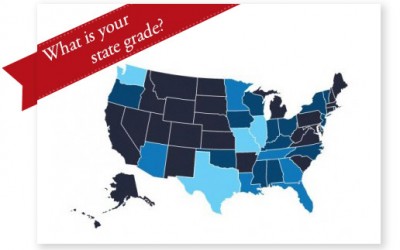
What Grade Did your State Get for Bringing Justice to Victims of Sex Trafficking this Year?


The fight against modern slavery is global and effects every race and age, however those most at risk for exploitation are children, including those right here at home. Despite great efforts and awareness all too many eyes remain closed to the realities of modern slavery and the innocent victims it holds in it's relentless grasp. One child victimized by the unspeakable acts of sexual exploitation and human trafficking is too many. Nonetheless every year in the United States, experts estimate at least 100,000 children -that is some 274 children a day- are exploited in the U.S. commercial sex industry. The average age of a child when they are first sexually exploited through prostitution is only 13 years old.

Last week on, On November 29, Shared Hope International released its 2012 Protected Innocence Challenge. “The Protected Innocence Challenge is a comprehensive study on existing state laws designed to inspire and equip advocates. Under the Challenge, every state receives a Report Card that grades the state on 41 key legislative components that must be addressed in state’s laws in order to effectively respond to the crime of domestic minor sex trafficking. In addition, each state receives a complete analysis of this 41-component review and practical recommendations for improvement.

DID YOUR STATE MEET THE GRADE?
Sadly no States received an A and more States received an F than any other grade, with nearly as many coming in with a D, it has left us with 69% of our States failing to even reach the C mark.
A (0)
 B (7) – FL, GA, IL, LA, MO, TX, WA
C (9) – AK, AZ, IN, MA, MN, OH, OK, TN, WI
D (17) – AL, CO, DE, IA, KY, MD, MS, NE, NJ, NV, NY, NC, OR, RI, SC, UT, VT
F (18) – AR, CA, CT, DC, HI, ID, KS, ME, MI, MT, NH, NM, ND, PA, SD, VA, WV, WY 

Despite the low rankings among the majority of States, this years report card showed significant improvement -though States have a long way to go.
  • 15 states improved their grades from 2011 
  •  2 states went up two grades: AK and MA went from F to C 
  • 13 states went up one grade:
    • 3 new “B” states: LA, FL, GA 
    • 6 new “C” states: AK, IN, MA, OH, OK, WI 6 new “D” states: CO, MD, NE, NV, SC, UT
  • 7 states improved their Protected Innocence Challenge scores by 10+ points:
    •  MA went up 29.5 pts 
    • WV went up 21 pts 
    • LA went up 17 pts 
    • SC went up 17 pts 
    • AK went up 14.5 pts 
    • OH went up 12 pts 
    • WI went up 10 pts 3. 
Each State was scored based on six categories of law; states have achieved perfect scores in sections 1 and 6, with “near perfect” scores in the other areas of law:
  1. Criminalization of Domestic Minor Sex Trafficking: IL and TX have perfect scores (10 points possible) 
  2. Section 2 Criminal Provisions Addressing Demand: LA now has a “near perfect” score with 24.5 points (25 points possible) 
  3. Criminal Provisions for Traffickers: MS, KY, FL and AL have a “near perfect” score with 14.5 points (15 points possible) 
  4. Criminal Provisions for Facilitators: LA and WA have a “near perfect” score with 9.5 points (10 points possible) 
  5. Protected Provisions for Child Victims: IL is the closest to a “near perfect” score with 24.5 points (27.5 points possible) 
  6. Criminal Justice Tools for Investigation and Prosecution: AL, MN, OH and TX have perfect scores (15 points possible) 4. Most Improved = MA 5. Highest Score = LA 6. Worst score = WY 
Looking at legislative progress over the past year, since the release of the 2011 Protected Innocence Challenge:* 
  • 240 state and 38 federal bills were introduced which relate to domestic minor sex trafficking. 
  • 78 laws were passed that relate to domestic minor sex trafficking. 
  • 40 states had legislation introduced that relates to the Protected Innocence Framework. 
  • 33 states enacted legislation related to the Protected Innocence Framework. 

The release of the Protected Innocence Challenge report was done in conjunction with Sharing the Hope 2012 in Washington, DC, a three-day event which included community and law enforcement training and the National Colloquium -a forum of national experts on the issue of shelter and service provisions for child victims of human trafficking.  The final day of the event cumulated with the Sharing the Hope Gala and Pathbreaker Award Ceremony honoring Ernie Allen, President and CEO of the International Center for Missing and Exploited Children; Drew Oosterbaan, Chief, Child Exploitation and Obscenity Section (CEOS) of the U.S. Department of Justice; Amy O’Neill Richard, Senior Advisor to the Director in the State Department’s Office to Monitor and Combat Trafficking in Persons; and Deborah Richardson, Executive Vice President of the National Center for Civil and Human Rights.

The full report can be found and downloaded here.

*Statistics are based on Congressional Quarterly State Track accounting for legislation introduced or passed between August 1, 2011 and August 1, 2012.

Monday, November 12, 2012

Modern Slavery News Round-Up


U.N. Report Calls for Decriminalizing Prostitution
Prostitutes in Thailand and New Zealand don't face the repressive laws that exist in the rest of the region, according to a new U.N. report that calls for the decriminalization of the voluntary sex trade. The worst countries to be caught possessing a condom while  appearing to work as a prostitute include China, Fiji, India, Indonesia, Malaysia  Myanmar, Nepal, Papua New Guinea, the Phillipines, Sri Lanka and Vietnam. So-called "flying" sex workers are people, such as students, who work part-time. Cherie Hart, a spokesperson for the U.N. Development Program (UNDP), stated that the "criminalization [of prostitutes] increases vulnerability to HIV." The report found "no evidence that [criminalization] has prevented HIV epidemics among sex workers," and called for euphemisms, like the preferred use of the term/phrase 'sex work'.

California's Prop 35: Why Some Oppose an Anti-Sex-Trafficking Initiative
California is quite solidly behind Prop 35, and if it passes tomorrow, several new provisions will be put in place, including a raise in the punishment for sex trafficking of a minor with force or fraud to as high as a life sentence, increased fines for trafficking to pay for services that help victims, and required registration of all convicted sex traffickers to the sex offender registry. The FBI says California is a major hub for trafficking, and the Los Angeles Police Department says that more gangs are using forced prostitution for revenue, rather than drugs.

North Korea, China Joins Calls for Japan to Settle Grievances over Wartime Sex Slavery
North Korea and China joined South Korea's calls for Japan to resolve a lone-standing grievance regarding women forced to serve as sexual slaves during World War II, displaying a show of unity against Tokyo over the issue at a U.N. meeting, Seoul officials said Thursday. A total of seven nations, including North and South Korea, China, and the Netherlands, pressed Japan to settle the issue on a humanitarian level at last week's meeting of the Universal Periodic Review (UPR) of the Human Rights Council, a U.N. body. It appears that aging women were forced into sexual slavery in brothels run by the Japanese military during World War II.