Welcome to the Bridge to Freedom Foundation Blog


Thank you for visiting the Bridge to Freedom Foundation (BTFF) blog, where we look forward to bringing you inside information on the inner-workings of BTFF, inside information on our volunteer team and leadership, in-depth coverage of BTFF and partner events, news and happenings from across the globe and so much more.

Learn more about Bridge to Freedom Foundation and how you can help on the BTFF website. We do hope you will subscribe to and follow our blog and please e-mail us at blog@btff.org if you have any feedback, ideas or contributions.

Thank you for your support!
Cassandra Clifford
Executive Director and Founder of BTFF
Showing posts with label sexual exploitation. Show all posts

Monday, March 24, 2014

Modern Slavery News Round-up

Texas: 100 people found in suspected human trafficking stash house
A house overflowing with more than 100 people presumed to be in the US illegally was uncovered just outside Houston on Wednesday, a police spokesman said. The people were primarily from Guatemala, Mexico, Honduras and El Salvador, he said. Two of the people, a pregnant woman and a man, have been taken to a hospital for unknown treatment, he added. Although Palmore said it was too early to say whether this was part of a human trafficking operation, he said it appeared that way.

Wichita men held for human trafficking
Prosecutors said 21 year-old Polo Miller is charged with 2 counts of aggravated human trafficking and 2 counts of commercial sexual exploitation of a child. 20 year-old Alexander Lane is charged with 2 counts of aggravated human trafficking. Both men made their first court appearance Thursday.

Iowa lawmakers wrangle with human trafficking bill
Lawmakers in Iowa are taking action to crack down on sex trafficking involving minors across the state. Legislation on the topic has won unanimous support in both chambers. Most recently, a measure that Rep. Greg Heartsill, a Republican from Melcher-Dallas, calls a "hybrid" of House and Senate versions overwhelmingly passed Wednesday in the House, 97-0. Democratic lawmakers worry that changes made to the bill, like the removal of reporting requirements and a victim support fund, take away from making the victim the priority.

Bern officals crack Thai human trafficking ring
The Bern cantonal prosecutor’s office says it has charged a 52-year-old Swiss-Thai woman for human trafficking and exploiting 25 sex trade workers from Thailand. The victims, including young women and transexuals, were working in brothels financed by the woman and operated by other people of Thai origin in the canton of Aargau, Bern and Lucerne, the office said on Friday.

Nation's top human trafficking route runs through Houston
A congressional hearing took place at Texas Southern University on Thursday to discuss the issue. The federal government considered the Houston area to be one of the biggest hubs in the country for human trafficking. In fact, the 1-10 corridor has been labeled as the number one trafficking route in the country.

Friday, March 21, 2014

Fact: The U.S. is a Primary Destination Country for Human Trafficking

     
The United States is primarily a destination country for adults and children trafficked from all over the world for the purposes of sexual and labor exploitation.

The top countries of origin for foreign victims identified in 2010 were Thailand, India, Mexico, Philippines, Haiti, Honduras, El Salvador and the Dominican Republic. Internal or domestic sex trafficking, where American children and legal residents are trafficked within the United States, also occurs. US citizen victims of child sex trafficking are usually homeless, runaways or come from a broken home or dysfunctional family. Trafficking for commercial sexual exploitation takes place in street prostitution, massage parlours and brothels. Under the Trafficking Victims Protection Act of 2000, the primary element of trafficking has changed from transportation to exploitation; thus sexual exploitation of children, including child prostitution, is classified as child trafficking under this law

Friday, July 5, 2013

FACT: Male to Female Transgenders Get Trafficked Too.


Human trafficking and sex work are issues in the transgender community that have often gone un-addressed by policy makers, service providers, and the LGBTQ rights movement. Those involved in the sex industry for any reason are often discriminated against, criminalized, victimized, and denied their human rights. Researchers suggests that because of economic necessity, many male-to-female (MTF) transgender individuals trade sex for money, drugs, housing, and other things they may need. To date, no studies have quantitatively assessed psycho social correlates of condom use with this population.findings highlight an urgent need for multilevel risk reduction interventions for MTF transgender individuals involved in sex trade. Such interventions will be most effective if they address the psycho social context of sexual risk taking by focusing on issues such as low self-esteem, sexual violence, and illicit drug use. Read More
                                                                     

Monday, February 4, 2013

Sex Trafficking and the Superbowl


Last night was one of the biggest events of the year for American sports fans -and non-sports fans for that matter- as the Baltimore Ravens battled the San Francisco 49ers battled it out for Super Bowl XLVII. However as the Ravens worked to see their way into NFL history, countless people were the victims to the sex crimes - all directly associated with football’s biggest day.

America's biggest sporting event is also America's biggest day for sex trafficking. Only days before the Super Bowl XLVII, New Orleans police arrested eight people and rescued five women from a human-trafficking-related operation (Fox 8 News).  Busts such as this one are not only a small indicator to the large scale, but have now dubbed the sports event the “single-largest human-trafficking incident in the United States". Some 300,000 American women and children as young as 12 years old are sexually exploited each year. While it is possible for people to be abducted during the Super Bowl, most are likely taken beforehand and used at major, large-scale events like the Super Bowl.

Such incidents include the estimated 10,000 women and minors that were trafficked in the Miami area during the 2009 Super Bowl in Tampa, Fla., according to the Florida Commission Against Human Trafficking. The Tampa Bay Times provided details of a trafficker being arrested for offering two girls, one 14 and one 18, for $300 as "a Super Bowl special." The trafficker, Manuel A. Walcott, was apparently advertising the girls on Craigslist and was subsequently sentenced to 20 years in prison. The girls had been held captive as prostitutes for two years.

Texas Attorney General Greg Abbott told USA Today in 2011 -when his state hosted Super Bowl XLV- that; "The Super Bowl is the greatest show on Earth, but it also has an ugly underbelly," In 2011 while the Green Bay Packers defeated the Pittsburgh Steelers; 133 prostitution-related arrests were made that year.

Clemmie Greenlee, a survivor of sex trafficking,recounted in the New Orleans how she was taken to Southern cities to prostitute for those attending such large-scale events as the Super Bowl. She's sitting in the lobby of a New Orleans hotel, decorated with San Francisco 49ers and Baltimore Ravens decorations. Her pimps took advantage of the large influx of people who attended the Super Bowl to increase business by mandating 25 a day to Greenlee and their other victims. If they didn't make the quotas they were severely beaten, raped, or forced to watch another girl receive the punishment. Now 53, Greenlee works at Eden House in Uptown New Orleans, the first shelter for sex-trafficking victims in Louisiana; the center opened in October 2012.

This year in preparation for the the Super law enforcement agencies and advocacy groups collaborated with local businesses in order to spread awareness. One such group of volunteers and coalition members, Klaas Kids travel to each Super Bowl to investigate the sex trafficking. They often find young girls, some who were reported missing. According to Brad Dennis, Klaas Kids search director, as many as "2,200 children are reported missing every day in the United States. That`s an awful lot of kids on the streets for predators to take advantage of..." and the primary reason they target Super Bowls for their investigations (Fox).  He and Nita Belles, who began work after researching human trafficking for her book ‘In Our Backyard,’ along with other members split up into groups searching through neighborhoods from New Orleans to Biloxi, MS. They`re sending information to joint task forces in both states. Biloxi Police Sgt. Aldon Helmert says, “when we`re able to have citizens to be our eyes and ears, it provides us a great deal more resources.” The investigations have led to at least 15 rescues with one of the girls had been reported missing.

Large scale awareness campaigns such as the USA Today  full page ad promoting the End It Movement -an anti-human-trafficking campaign launched at the 2013 Passion Conference, in accordance with the Super Bowl. The A 21 Campaign, established in 2008, released several Super Bowl-related info-graphics -such as the one shown above- about human trafficking this year.


Thursday, January 31, 2013

Anti-Trafficking Symposium Presented by Goodwill Ambassador, ICE, and Federal Officials


The “Anti-Human Trafficking Symposium: Transforming the Coalition” co-sponsored by Georgetown University and Delotte on January 30, 2013 included keynote speakers, actress Mira Sorvino as the United Nations goodwill ambassador on human trafficking and the Immigration and Customs Enforcement (ICE) Director, John Morton. The symposium gathers government, academic, non-profit and business leaders to revamp the fight against the illegal billion dollar industry that traffics human beings for sexual exploitation and forced labor.

Other keynote speakers included Luis CdeBaca from the U.S. Office to Monitor and Combat Trafficking in Persons’ ambassador at large; Acting Associate Attorney General Tony West; and Alice Hill, senior counselor to the secretary of homeland security as well as two panels covering trends and challenges.  Coverage by Georgetown University includes web casts from Sorvino, Morton, and CdeBaca.

Key points discussed in the symposium paved the way ahead:
  1. Combatting Trafficking
  2. Trends and Challenges
  3. New Technology

Delotte captures the highlights of the “Anti-Human Trafficking Symposium: Transforming the Coalition” they co-sponsored with Georgetown University, citing that over 300 people attended the event, several thousand viewed it on Georgetown's website (GULive) and C-SPAN, and some viewed the transcript of Mira Sorvino's speech." 

They also provide a more complete listing of keynote speakers and panelists for those that may be interested in hearing more from the presenters at the symposium:

Friday, December 7, 2012

Fact: 42% of the Recruiters of Modern Slavery are Women


Andrew Fung of Simon Fraser University put together a wonderful piece titled "Human Trafficking Visualized" for a school project. He took various statistics available on modern slavery and converted them into an infograph. He did an amazing job of simplifying this complex phenomena of modern slavery. However, the visual mislabelled the two forms of this crime, debt bondage and sexual slavery, as two of the most common causes of modern slavery. As explained in the picture, debt bondage involves people taking loans while sexual slavery involves someone being forced to sell their bodies agianst their will. Nevertheless, it is important to note that these two forms can overlap and eventually become the causes. For instance, debt bondage can result in someone becoming a victim after he/she is unable to pay off the loan borrowed and/or it can be used by criminals to keep someone in sexual slavery. While on the other hand, someone in sexual slavery can be forced to take out loans to pay for his/her housing, food, etc. 

Majority of the victims of this crime tend to be women and girls, approximately 80 percent and of that 50 percent are underage. Most often, women are only viewed as victims of this crime but rarely do people focus on the fact that women also play an active role in recruitment of victims. It is estimated that women make up about 42 percent of the recruiters. This is result of women being percieved as more trustworthy. The women recruits can themselves be previous victims of modern slavery, who are majority of the time being forced to recruit new members to buy their freedom. In about 54 percent of slavery cases the recruiters were strangers to the victims while 46 percent of the cases the victims knew their recruiter.

Due to the hidden nature of this crime, the exact number of the victims is still unclear and very difficult to calculate. This visual attempts to provide a rough estimate of the number of people illegally smuggled into North America. It shows that approximately 700 people are smuggled into Canada for the purpose of sexual exploitation and about 2,000 are smuggled into the US from Canada. However, the number of people brought into the US from around the world is far below the actual numbers and it is not clarified whether those people were brought into the US for the purpose of modern slavery or were just simply smuggled. There is a difference between smuggling and being brought to another country for the purpose of modern slavery. Smuggling is "transportation" based and the person is a willing party while modern slavery involves "exploitation" of person through teh use of force, fraud and coercion. A person being smuggled can become a victim of modern slavery as they go through vulnerable stages. 

Sources: Human trafficking infographic by Andrew Fung
              UN GIFT
              TIP Report 2007


Tuesday, December 4, 2012

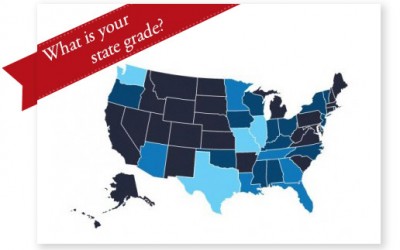
What Grade Did your State Get for Bringing Justice to Victims of Sex Trafficking this Year?


The fight against modern slavery is global and effects every race and age, however those most at risk for exploitation are children, including those right here at home. Despite great efforts and awareness all too many eyes remain closed to the realities of modern slavery and the innocent victims it holds in it's relentless grasp. One child victimized by the unspeakable acts of sexual exploitation and human trafficking is too many. Nonetheless every year in the United States, experts estimate at least 100,000 children -that is some 274 children a day- are exploited in the U.S. commercial sex industry. The average age of a child when they are first sexually exploited through prostitution is only 13 years old.

Last week on, On November 29, Shared Hope International released its 2012 Protected Innocence Challenge. “The Protected Innocence Challenge is a comprehensive study on existing state laws designed to inspire and equip advocates. Under the Challenge, every state receives a Report Card that grades the state on 41 key legislative components that must be addressed in state’s laws in order to effectively respond to the crime of domestic minor sex trafficking. In addition, each state receives a complete analysis of this 41-component review and practical recommendations for improvement.

DID YOUR STATE MEET THE GRADE?
Sadly no States received an A and more States received an F than any other grade, with nearly as many coming in with a D, it has left us with 69% of our States failing to even reach the C mark.
A (0)
 B (7) – FL, GA, IL, LA, MO, TX, WA
C (9) – AK, AZ, IN, MA, MN, OH, OK, TN, WI
D (17) – AL, CO, DE, IA, KY, MD, MS, NE, NJ, NV, NY, NC, OR, RI, SC, UT, VT
F (18) – AR, CA, CT, DC, HI, ID, KS, ME, MI, MT, NH, NM, ND, PA, SD, VA, WV, WY 

Despite the low rankings among the majority of States, this years report card showed significant improvement -though States have a long way to go.
  • 15 states improved their grades from 2011 
  •  2 states went up two grades: AK and MA went from F to C 
  • 13 states went up one grade:
    • 3 new “B” states: LA, FL, GA 
    • 6 new “C” states: AK, IN, MA, OH, OK, WI 6 new “D” states: CO, MD, NE, NV, SC, UT
  • 7 states improved their Protected Innocence Challenge scores by 10+ points:
    •  MA went up 29.5 pts 
    • WV went up 21 pts 
    • LA went up 17 pts 
    • SC went up 17 pts 
    • AK went up 14.5 pts 
    • OH went up 12 pts 
    • WI went up 10 pts 3. 
Each State was scored based on six categories of law; states have achieved perfect scores in sections 1 and 6, with “near perfect” scores in the other areas of law:
  1. Criminalization of Domestic Minor Sex Trafficking: IL and TX have perfect scores (10 points possible) 
  2. Section 2 Criminal Provisions Addressing Demand: LA now has a “near perfect” score with 24.5 points (25 points possible) 
  3. Criminal Provisions for Traffickers: MS, KY, FL and AL have a “near perfect” score with 14.5 points (15 points possible) 
  4. Criminal Provisions for Facilitators: LA and WA have a “near perfect” score with 9.5 points (10 points possible) 
  5. Protected Provisions for Child Victims: IL is the closest to a “near perfect” score with 24.5 points (27.5 points possible) 
  6. Criminal Justice Tools for Investigation and Prosecution: AL, MN, OH and TX have perfect scores (15 points possible) 4. Most Improved = MA 5. Highest Score = LA 6. Worst score = WY 
Looking at legislative progress over the past year, since the release of the 2011 Protected Innocence Challenge:* 
  • 240 state and 38 federal bills were introduced which relate to domestic minor sex trafficking. 
  • 78 laws were passed that relate to domestic minor sex trafficking. 
  • 40 states had legislation introduced that relates to the Protected Innocence Framework. 
  • 33 states enacted legislation related to the Protected Innocence Framework. 

The release of the Protected Innocence Challenge report was done in conjunction with Sharing the Hope 2012 in Washington, DC, a three-day event which included community and law enforcement training and the National Colloquium -a forum of national experts on the issue of shelter and service provisions for child victims of human trafficking.  The final day of the event cumulated with the Sharing the Hope Gala and Pathbreaker Award Ceremony honoring Ernie Allen, President and CEO of the International Center for Missing and Exploited Children; Drew Oosterbaan, Chief, Child Exploitation and Obscenity Section (CEOS) of the U.S. Department of Justice; Amy O’Neill Richard, Senior Advisor to the Director in the State Department’s Office to Monitor and Combat Trafficking in Persons; and Deborah Richardson, Executive Vice President of the National Center for Civil and Human Rights.

The full report can be found and downloaded here.

*Statistics are based on Congressional Quarterly State Track accounting for legislation introduced or passed between August 1, 2011 and August 1, 2012.

Monday, November 12, 2012

Salma and Jada's Campaign to Stop Modern Slavery


To listen to English version audio click Here

Salma Hayek and Jada Pinkett Smith joined forces with the 'Don't Sell Bodies' campaign to raise awareness about the explotation of girls and women around the world. The gripping video, titled "Nada" ("Nothing"), was directed by the Mexcian actress and features Smith singing the track in Spanish. The video is aimed at Latino girls who are often lured into sexual slavery by someone who they believe 'loves' them. Even though the video is in Spanish, it does not mean that the issue of modern slavery exists just in that part of the world. In fact, it exists and affects every country around the world. The issue of Modern Slavery was brought to Smith's attention by her daughter, Willow, and was inspired to get involved to bring awareness and combat the issue of modern slavery by Hayek.

To hear Smith talk about her vision for the piece and what the Spanish lyrics mean click Here 

Monday, August 27, 2012

The Candy Shop and Broken Dolls

Last week Elyse Elder posted, Fairy tales are battling child exploitation, on the eyeopening awareness short film, The Candy Shop, which we both watched together in the office.  As we watched the piece I was instantly blow away at the depth and artistic twist this short film, which Elyse's boyfriend -a horror film fanatic- stumbled across on YouTube.  The film was not the horror film he had expected, but it was a horror indeed and creeped him out more than most of the cinematic horrors he is used to watching.  As the storyline unfolded the films ere story turned into a nightmare that wasn't the unrealistic nightmare it appeared to be, but the hanis reality of little girls across the country. 

As I watched the film I was instantly carried back in time to childhood as the fairy tale like story began to unfold, however this Willy Wonka character, the Candyman-who's outlandish attire even resembled the glamorized version of an American Pimp- is in a business of satisfying grown men with tasty 'candy' treats. 

As the film unfolded it not only addressed the lost innocence of the Canyman's young victims, but that of the issue of demand for 'candy' that fuels the growing industry that exploits children.  The film's ending is bitter sweet as the not only are some of the 'lollipops' unable to be turned back into little girls, as they are 'too broken'- it also show how putting an end to one 'Canyman's' business is not enough as demand only finds it's way into a new location -reminding me of the endless fight to shut down Korean 'massage parlors' -brothels- we have fought so tirelessly in DC which would often just reemerge a few weeks later or move to Virginia.

Following the film I went rummaging through my old poetry and writings as I vaguely remembered using a similar creative analogy to sex trafficking years ago.  After a bit of searching I found what I was looking for, only it wasn't about a 'candy shop', but a 'doll shop' -though the symbolism and lost innocence parallel.

Broken Doll 
Frank Horvat: Broken doll at flea market, Paris, 1958 
She sits upon the shelf with all the other dolls, smiles painted across their faces, long lashes made to flutter.
Their pretty dresses positioned just right So beautiful and delicate they look upon the shelf.
Each one quietly waits for their buyer to take them home.
  One day the big man comes in, he looks at each little doll searching for the perfect toy to take home And then he sees her... He takes her from the shelf, “This one will do.” 
 Once at home she is no longer placed upon a shelf for one to look at.
She is placed upon the cold bed and positioned every which way the man likes.
Soon the man tires of his doll and he shares her with all his friends and she becomes every one's toy.  Her dress becomes tattered, her body bruised and worn.
But her smile remains firmly painted on her face Tossed around the bed like a rag doll, until she is thrown out with all the other broken dolls.
So many broken dolls... 
So many painted smiles hiding needless pain.
Cassandra Clifford (c)2008
While the film and poem take an artistic approach to opening one's eyes of the horrors of minor sex trafficking he real story is even more ghastly, as some 27 million persons are victims of modern slavery -including the sexual exploitation of young girls and boys. In the United states alone nearly 300,000 are estimated to be at risk for sex trafficking. According to the 2009 National Report on Domestic Minor Sex Trafficking, by Shared Hope International there are 100,000 children in the U.S. victimized each year.

Friday, August 17, 2012

FACT: the average age of entry into prostitution is 12-14 years old.

Did you know that the average age of entry into prostitution is only a mere 12-14 years old?

Child prostitution is the commercial sexual exploitation of children, for which a child is held under force, fraud or corrosion to perform sexual services, for financial gain. Pimps/traffickers target girls -or women- who are homeless, appear naive, lonely or rebellious. The victim first finds themselves in the spotlight of the attention and affection of the pimp -who then convinces her to “be his woman.” Pimps/traffickers then keep these innocent girls -or women- in virtual captivity through verbal and physical abuse. Many sexually exploited youth have been so psychologically manipulated by their pimps/traffickers that they are often compelled to return to them -thus why the investment into the self-worth and long-term development of survivors is key to the work of Bridge to Freedom Foundation. It is estimated that some 80% to 95% of all prostitution is pimp-controlled.