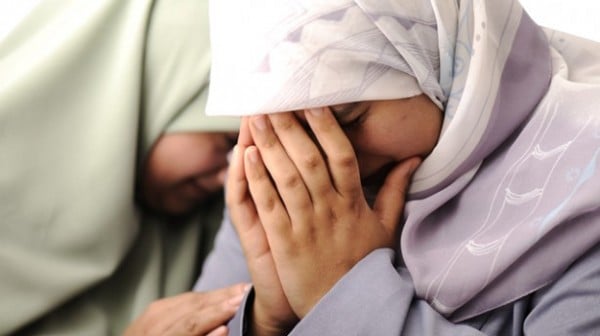
As we quickly roll into November and the holiday season, we remember October for a number of reasons; however, one important one is often forgotten. October was Domestic Awareness Month in the United States, but the purple ribbons — representing courage, survival, honor and dedication to ending domestic violence — were over shadowed by the flood of pink for Breast Cancer, which shares October as an awareness month. Undoubtedly both causes are worthy, but the uncontrollable plague of cancer seems to be easier to digest with the mainstream public and no one — not even NFL players — are afraid to wear pink all year long in support. Domestic violence is preventable, and it’s victims are more than just the wives of abusive spouses, but their children. So where was the purple?
Four million women are victimized by domestic violence every year, and three women die from abuse each year. Women and girls aged 16-24 are the most vulnerable, but violence affects Americans — as well as their international counterparts — regardless of gender, age, income, sexual orientation, race or religion. Victims of domestic violence are often also victims of modern slavery/human trafficking, via sex trafficking and forced marriages. The plague of domestic violence in the U.S. affects a woman or girl every nine seconds as a woman is assaulted physically and/or sexually. The most shocking fact about domestic violence is that most of these incidents/assaults are never reported. The reporting of domestic violence has continued to decrease even more in times of economic hardship because women so often stay with their abusive partner for financial sustenance in addition to fear and feel they do not have the needed resources to escape their abusers.
Although the numbers of those in situations of domestic violence are shocking in the U.S., these victims are not alone. Domestic violence has become seemingly a global plague, studies show that between one quarter and one half of all women in the world have been abused by intimate partners. The World Health Organization (WHO) reported that in 48 surveys from around the world, 10-69% of women stated that they had been physically assaulted by an intimate partner at some point in their lives. The WHO also reports that studies from a range of countries show that 40-70% of female murder victims were killed by an intimate partner.
To read the rest of this post by Bridge to Freedom Foundation Executive Director and Founder, Cassandra Clifford please click here to go to the Foreign Policy Association, where you will learn more about the links between domestic violence and modern day slavery.
Welcome to the Bridge to Freedom Foundation Blog
Thank you for visiting the Bridge to Freedom Foundation (BTFF) blog, where we look forward to bringing you inside information on the inner-workings of BTFF, inside information on our volunteer team and leadership, in-depth coverage of BTFF and partner events, news and happenings from across the globe and so much more.
Learn more about Bridge to Freedom Foundation and how you can help on the BTFF website. We do hope you will subscribe to and follow our blog and please e-mail us at blog@btff.org if you have any feedback, ideas or contributions.
Thank you for your support!
Cassandra Clifford
Executive Director and Founder of BTFF
Showing posts with label Cassandra Clifford. Show all posts
Wednesday, November 7, 2012
Monday, August 27, 2012
The Candy Shop and Broken Dolls
Last week Elyse Elder posted, Fairy
tales are battling child exploitation, on the eyeopening awareness short film, The Candy
Shop, which we both watched together in the office. As we watched the piece I was instantly blow away at the depth and artistic twist this short film, which Elyse's boyfriend -a horror film fanatic- stumbled across on YouTube. The film was not the horror film he had expected, but it was a horror indeed and creeped him out more than most of the cinematic horrors he is used to watching. As the storyline unfolded the films ere story turned into a nightmare that wasn't the unrealistic nightmare it appeared to be, but the hanis reality of little girls across the country.
As I watched the film I was instantly carried back in time to childhood as the fairy tale like story began to unfold, however this Willy Wonka character, the Candyman-who's outlandish attire even resembled the glamorized version of an American Pimp- is in a business of satisfying grown men with tasty 'candy' treats.
As the film unfolded it not only addressed the lost innocence of the Canyman's young victims, but that of the issue of demand for 'candy' that fuels the growing industry that exploits children. The film's ending is bitter sweet as the not only are some of the 'lollipops' unable to be turned back into little girls, as they are 'too broken'- it also show how putting an end to one 'Canyman's' business is not enough as demand only finds it's way into a new location -reminding me of the endless fight to shut down Korean 'massage parlors' -brothels- we have fought so tirelessly in DC which would often just reemerge a few weeks later or move to Virginia.
Following the film I went rummaging through my old poetry and writings as I vaguely remembered using a similar creative analogy to sex trafficking years ago. After a bit of searching I found what I was looking for, only it wasn't about a 'candy shop', but a 'doll shop' -though the symbolism and lost innocence parallel.
As I watched the film I was instantly carried back in time to childhood as the fairy tale like story began to unfold, however this Willy Wonka character, the Candyman-who's outlandish attire even resembled the glamorized version of an American Pimp- is in a business of satisfying grown men with tasty 'candy' treats.
As the film unfolded it not only addressed the lost innocence of the Canyman's young victims, but that of the issue of demand for 'candy' that fuels the growing industry that exploits children. The film's ending is bitter sweet as the not only are some of the 'lollipops' unable to be turned back into little girls, as they are 'too broken'- it also show how putting an end to one 'Canyman's' business is not enough as demand only finds it's way into a new location -reminding me of the endless fight to shut down Korean 'massage parlors' -brothels- we have fought so tirelessly in DC which would often just reemerge a few weeks later or move to Virginia.
Following the film I went rummaging through my old poetry and writings as I vaguely remembered using a similar creative analogy to sex trafficking years ago. After a bit of searching I found what I was looking for, only it wasn't about a 'candy shop', but a 'doll shop' -though the symbolism and lost innocence parallel.
Broken Doll
Frank Horvat: Broken doll at flea market,
Paris, 1958
She sits upon the shelf with all the other dolls,
smiles painted across their faces, long lashes made to flutter.
Their pretty dresses positioned just right
So beautiful and delicate they look upon the shelf.
Each one quietly waits for their buyer to take them home.
One day the big man comes in, he looks at each little doll
searching for the perfect toy to take home
And then he sees her...
He takes her from the shelf, “This one will do.”
Once at home she is no longer placed upon a shelf for one to look at.
She is placed upon the cold bed and positioned every which way the man likes.
Soon the man tires of his doll and he shares her with all his friends and she becomes every one's toy. Her dress becomes tattered, her body bruised and worn.
But her smile remains firmly painted on her face
Tossed around the bed like a rag doll, until she is thrown out with all the other broken dolls.
So many broken dolls...
So many painted smiles hiding needless pain.
Cassandra Clifford (c)2008
While the film and poem take an artistic approach to opening one's eyes of the horrors of minor sex trafficking he real story is even more ghastly, as some 27 million persons are victims of modern slavery -including the sexual exploitation of young girls and boys. In the United states alone nearly 300,000 are estimated to be at risk for sex trafficking. According to the 2009 National Report on Domestic Minor Sex Trafficking, by Shared Hope International there are 100,000 children in the U.S. victimized each year.
Tuesday, August 14, 2012
Syrian refugees struggle to cope and seek child marriage as a solution
Recent concerns have sparked as child marriages spike among Syrian refugees in Jordan. Difficult conditions in Jordan have many parents pushing to have their daughters married at an earlier age. The issue has created a concern among many international aid organizations that the rise in child marriage has been brought on as a sort of coping mechanism to adjusting to life as a refugee in the country. The majority of these young girls are in their early teens and are increasingly being married to older Syrian men as a form of financial and other security against a backdrop of conflict and instability. Early marriage is against the laws of both Syria (minimum age of marriage at 17 for boys and 16 for girls) and Jordan. However, in Syria, religious leaders may still approve “informal marriages” at for girls from 13 years-old and for boys from 16 years-old. The “informal marriages” allows spouses to live in the same home and have children, but is only legally registered once both turn 18. In Jordan the legal minimum age for marriage is 18-years-old for both spouses, though in exceptional circumstances marriages involving 15-year-olds are allowed — it is illegal for anyone under 15 to get married. Hana Ghadban, a volunteer with the Syrian Women Association (SWA), told IRIN that in the Syrian cities of Homs and Dera’a many girls are married at the age of 13 or 14. “We know of so many girls who got married after moving to Jordan. Most of them were engaged in Syria.”
“They rape girls who are as young as her in Syria now. If they raped a nine-year-old girl, they can do anything. I will not feel OK if I do not see her married to a decent man who can protect her,” said the father of Hanadi, a pregnant child bride in Jordan aged 14.To read the rest of this post by Bridge to Freedom Foundation Founder and Executive Director, Cassandra Clifford on the Foreign Policy Association's Children's Rights Blog here.
Subscribe to:
Posts (Atom)