Welcome to the Bridge to Freedom Foundation Blog


Thank you for visiting the Bridge to Freedom Foundation (BTFF) blog, where we look forward to bringing you inside information on the inner-workings of BTFF, inside information on our volunteer team and leadership, in-depth coverage of BTFF and partner events, news and happenings from across the globe and so much more.

Learn more about Bridge to Freedom Foundation and how you can help on the BTFF website. We do hope you will subscribe to and follow our blog and please e-mail us at blog@btff.org if you have any feedback, ideas or contributions.

Thank you for your support!
Cassandra Clifford
Executive Director and Founder of BTFF
Showing posts with label child sex slavery. Show all posts

Wednesday, November 6, 2013

Demand Change in the Heartland


It is with great pleasure that I was able to travel to Kansas City, Missouri in October to not only conduct Violence Prevention Workshops, but to attend the Demand Change in the Heartland Conference. The conference was hosted by Veronica's Voice and featured a survivor only led panel. This amazing panel of determined, courageous, inspiring and spirited group of fighters not only shared their stories, but more importantly focused on the hurdles that victims and survivors face on the road to recovery and to lead thriving lives.

Veronica's Voice's, Demand Change Conference truly amazed me in so many ways that I don't think I can even share enough with you.  I was immediately awoken from my early morning daze and incredibly proud of the power of change that begun to kick off in the early morning on a a Saturday in America's Heartland -and my hometown.  Hometown pride has a whole new meaning now...as does the true unbreakable spirit of a Midwestern girl -no one can hold a flame to the ladies that sought to bring this house down!

As an organization that is newer and who's mission is to bring those victimized by modern slaver from a point of surviving to thriving, I personally and professionally see survivor informed services as the only way forward.  Bridge to Freedom Foundation is about the future not the past, and while we may hear many survivor stories along the way we let the survivor lead and never ask, "what happened", therefore this conference held a great deal of meaning for us and sought to ensure we continue to learn and grow from the survivor community.  BTFF strives to ensure we never forget who it is we work for and why.  Kristy Childs Founder and Director of Veronica's Voice, ut it best; "Let survivors share their story and what they want to share. Be mindful, have compassion without the details. That is dignity!.  Childs also added, "...when we see some as worthy victims an others as unworthy, we are causing great harm."

One of the day's key topics was the re-victimization of victims and the labeling placed on them, including that treating and arresting as criminals and using victimizing words such as "prostitute".  "Prostitution is an extension of slavery" added Vednita Carter of Breaking Free.  Many survivors have criminal records, including felonies following arrests for prostitution charges and vacating such crimes is not easy nor possible in call states.   Tina Frundt, Founder and Executive Director of Courtney's House broke down the harsh realities of labeling and the continual harm it causes as she spoke with unfiltered dynamism; "...what now at 20...22...I'm worth nothing because you didn't help me at 9?"

The harsh reality so many do not want to face or turn a blind eye to was not swept under the rug and even if you wanted to turn a blind eye you were too paralyzed to do so as the rooms power, inspiration, passion and leadership took you in and the heartfelt and intimate stories of the survivors took hold of you.

Brenda Myers-Powell , Founder of the Dream Catcher Foundation, spoke about her journey with a vibrancy and yet painstakingly sharp honesty that one so rarely hears on any stage; This was "...not something I got into it was something I was almost born into... All I waned to do was be shinny, but the shine kept getting taken away from me teach time I was molested."   Myers-Powell was not alone on this stage sharing often painful intimate details of their path from victim, survivor to a empowered thriving woman, and all of these remarkable leaders filled the room with the loudest voices of truth one can find.  Christine McDonald, who's book "Cry Purple", is one of the most heartwarming stories of courage, survival and triumph; showed that innocence does not have to be lost as she infected the room with her contagiously sweet laugh in the midst of telling stories that would have broke so many before they began.

The event put forward so many valuable lessons in a frank and feasible manner, that makes one question why we have not been talking like this (or listening) and resolving these issues all along.  Survivor informed and led services are key to breaking the cycle and ensuring that those abused by the chains of human trafficking are enabled to lead thriving lives with dignity.  "We need to be more than well- intended, we must be intentional!" stated, Dr. Karen Countryman-Roswurm.  Intention to see one thrive and lead their own journey requires many steps and all must be informed, as Rowena Mathews, Alumni Member of Breaking Free stated; "We need a lot of little things before we are able to walk on our own."

 The event even hosted a powerful dance performance;  "The Game" by Erin Murphy, featuring the words and stories of survivors from Veronica's Voice.  Like the performance this conference was truly a one of a kind inspirational event that drives you to act in an intentional and sustainable manner with the survivors needs at the center of it all.

Friday, October 25, 2013

Fact: “Hey! Did you know that October is also…..”

Pink whistles for the referees.
Pink gloves for the linemen, for the quarterbacks.
Pink cleats for the kickers.
Pink ribbons for….everyone.
Pink ribbons on cars in the parking lot...pink...pink...everywhere you turn you see pink!


October is Breast Cancer Awareness month and the NFL and the fans are all joining the party on the fields of America’s favorite fall past time.

I am glad we see pink on the football field. Even so, there are equally insidious assaults against women unknown to the stands of fans and fields of players. Yes, breast cancer kills, and it is terrible and no woman should ever have to go through it. However no woman, girl or child should ever go through physical or sexual assault or abuse.

Did you know; however, that October is also Domestic Violence and Fair Trade Awareness Month?  If you are shaking your head no, do not feel badly. Feeling guilty is not going to help. What will help is getting the word out. If even half the money that goes into Breast Cancer awareness campaigns also went into domestic violence, Fair Trade and Human Trafficking it would no longer be a a hush hush conversation or a shock to ones ears.

The fight against domestic violence and the cruel brutality of modern slavery -human trafficking- can be just as big as breast cancer.  We have so many stories of hope floating around breast cancer survivors, and they are there thanks to the prominent pink ribbons that everybody knows what stand are for.  That same effort, money and commitment that made such a difference and has led to even more survivors could also be poured into the fight to end violence and discrimination against so many who fight under a cloak of darkness and silence in homes, on streets and in fields across the country and globe.

The tables can turn. You can help. Talk about it. Tell your friends…
“Hey! Did you know that October is also Domestic Violence and Fair Trade Awareness Month!"  So lets turn the tables today!

Check out an article I wrote more ineptly on Domestic Violence Awareness Month for the Examiner here: End the Cycle of Violence: October is Domestic Violence Awareness Month


Friday, October 11, 2013

International Day of the Girl Child

Today Bridge to Freedom Foundation (BTFF) is proud to celebrate the second annual International Day of the Girl Child. Enacted by the United Nations in 2011, this day offers an opportunity to highlight gender inequality and the fulfillment of human rights for all women and girls -including the elimination of violence.

The International Day of the Girl Child provides not only everyone at BTFF a greater platform to raise our voices and improve the lives of women and girls around the globe, but for you to join us and make your voice heard. It is that reason BTFF is proud to announce the launch of our Violence Prevention Program on this very special day dedicated to girls around the world. Please help us ensure that girls are not only able to lead thriving lives, but are able to walk through their daily lives aware and empowered to fight against violence!

We hope you will join us in honoring the Day of the Girl Child, as well as October being Domestic Violence Prevention Month, by donating to our Violence Prevention / Self-Defense fundraising campaign.  Please click here to see how you can sponsor a free 3 hour workshop for a survivor.

Wednesday, October 2, 2013

Modern-Slavery News Round-Up

All Hands on Deck: Renewing the Call to Combat Human Trafficking Spet. 25: One year ago today, President Obama announced the Administration’s commitment to lead the fight against human trafficking during a seminal speech at the Clinton Global Initiative Annual Meeting. ...Over the past year, we’ve made great strides and increased our efforts in order to realize the President’s vision. However, we still have so much more to do. The President said in his remarks one year ago, “It ought to concern every person, because it is a debasement of our common humanity. It ought to concern every community, because it tears at our social fabric. It ought to concern every business, because it distorts markets. It ought to concern every nation, because it endangers public health and fuels violence and organized crime. I’m talking about the injustice, the outrage, of human trafficking, which must be called by its true name – modern slavery.”

Michigan: Human trafficking: 19-bill package aims to curb 'modern day slavery' in Michigan, help victims Michigan state Sen. Judy Emmons on Thursday unveiled a 19-bill package intended to crack down on human trafficking and offer help to victims of a crime that many call a form of "modern day slavery." The bipartisan package, to be formally introduced next week, features bills that would provide safe harbor for victims, eliminate the statute of limitations for trafficking offenses, allow victims to sue their captors and enable a prosecutor to utilize wire tapping while building a criminal case.

Florida: Statewide human-trafficking initiative focuses on children A new statewide initiative championed by Florida Attorney General Pam Bondi aims to end human trafficking by encouraging parents and children to discuss the dangers of talking to strangers online. The "From Instant Message to Instant Nightmare" crusade, unveiled Friday, includes billboards, mall displays and bus-shelter posters asking parents and children to educate themselves about sex traffickers who target children, tweens and teens online.

A Bold Plan to Aid Sex-Trafficking Victims As understanding of the cruel dynamics of sex-trafficking has grown in recent years, a consensus has emerged among criminal justice professionals that it makes more sense to treat people charged with prostitution as the exploited and abused victims a vast majority are, rather than as criminals. An important new initiative by New York State’s chief judge, Jonathan Lippman, aims to put that humane insight into practice. A handful of cities across the country, including Baltimore and Phoenix, have specialized courts that deal with sex-trafficking offenses. On Wednesday, Judge Lippman announced the creation of the nation’s first statewide system of specialized criminal courts to handle prostitution-related offenses and make services available to help sex-trafficking victims escape their abusive situations and forge new lives.

Monday, September 16, 2013

Modern Slavery News Round-Up

Great Britain: 'Modern slavery' bill to tighten laws on human trafficking
Home secretary, Theresa May, aims to toughen legislation and counter 'shockingly low' prosecution rates. The home secretary said that prosecution rates for human trafficking were still "shockingly low" across Europe and that an overhaul of the law was needed as there was still some uncertainty over which agencies should be tackling the problem. The bill, which will be introduced before the current session of parliament ends next spring, will consolidate and toughen existing anti-trafficking legislation.

Texas: Bill would target domestic human trafficking
Sen. John Cornyn, R-Texas, said the Justice for Victims of Trafficking Act, co-sponsored with Rep. Ted Poe, R-Humble, will add to existing federal efforts to combat what he called the “scourge of human trafficking.” “We have to make human trafficking unprofitable, and we have to make the consequences such that people simply don't want to risk it,” he said. The bill would create a special fund that would finance human trafficking deterrence and victims' support programs through fines and penalties assessed on those convicted of child pornography, sexual exploitation, human trafficking and human smuggling offenses. Currently, about $20 million to $30 million in federal money goes to domestic trafficking prevention and deterrence — far less than that dedicated to international trafficking deterrence programs, Cornyn said. His bill would boost federal funding for domestic human trafficking victim support programs by an estimated $10 million to $20 million.

Black Mauritanians suffer 'slavery-like' conditions, says UN Black Mauritanians are still subject to slavery-like practices, including sexual violence and discrimination, a UN human rights expert has said. The UN special rapporteur on racism, Mutuma Ruteere, told the Guardian that generations of people, particularly women and girls, were still living with families in a "slavery-like" relationship, and were being forced into sex with male relatives, in some cases with their fathers.

Mauritania: Modern-Day Slave Finds Freedom in the Desert
At SOS Esclaves offices in Nouakchott, Mauritania's capital, Matallah Ould Mbarak Alsalem prepares tea. Matallah is a handyman and cleaner at SOS Esclaves, an NGO dedicated to the fight against slavery and coming to the aid of slaves and former slaves. He is one himself. Born in a desert region of north-eastern Mauritania, his mother was a Hratine, a slave, and by convention so was he. The Hratine, the main slave caste, are descendants of black African ethnic groups subjugated for the most part by white Arab Berbers. Estimates indicate that 10-20 percent of Mauretania's 3.5 million people are slaves, though exact numbers are hard to come by.

Cindy McCain: Address human trafficking before 2015 Super Bowl
McCain is calling on Arizona leaders to enact harsher penalties for human traffickers before the Super Bowl lands in Glendale in 2015 because the sports event is one of the largest drivers of the sex-trade industry. The annual football game is among the most-watched sports events in the world and draws tens of thousands of people to its host city. State attorneys general in Texas and Indiana, where recent Super Bowls were held, and other experts, have said the event creates an ideal setting for traffickers because they easily can go unnoticed in the influx of people, according to media reports. New Jersey, which will host the 2014 Super Bowl, recently passed a new law toughening penalties for traffickers.

ILO Initiative Protects Women from Modern-Day Slavery Over 100,000 girls and women in South Asia are set to benefit from a new initiative by the International Labor Organization and the UK Department for International Development, which aims to prevent trafficking within the region and to the Middle East. The Work in Freedom program, funded by UK aid, will focus on trafficking in domestic labor and the garment sector through known labor trafficking routes from Bangladesh, India and Nepal, to Jordan, the United Arab Emirates, Lebanon and India.

Monday, August 19, 2013

Modern Slavery News Round-Up

Human Trafficking Fighters Improve Rating for Wyoming
 The leading organization in the global fight against human trafficking and modern-day slavery lauded the state of Wyoming on Wednesday for finally adopting a law to combat the practices. The Polaris Project lifted its Wyoming rating from zero to tier two, with four being the highest, as a result of the legislation signed into law by Gov. Matt Mead last winter. Wyoming became the final state to adopt a statute outlawing human trafficking. Federal authorities previously had prosecuted such cases in Wyoming.

Trial Date Set in Sex Trafficking Case. 
A federal judge in Wichita has scheduled an October trial for three people charged in a sex trafficking scheme linked to Asian massage parlors. U.S. District Judge Eric Melgren on Wednesday issued an order scheduling an Oct. 15 trial for Gary H. Kidgell; his wife, Yan Zhang; and employee Xiuqing Tian. They are accused of conspiring to recruit women from around the country to come to Wichita to work at massage parlor, then coercing them into prostitution.

From Foster Care into Sex Trade. 
Every year, federal and state governments pour millions of dollars into combating sex trafficking through local and federal law enforcement agencies. But the emerging link between the child welfare system and child sex trafficking in the United States underscores the need for a new tactic, one that addresses the social origins of child sex trafficking.At the end of July, the FBI’s Innocence Lost initiative, the wing of the agency tasked with addressing domestic child sex trafficking, conducted its annual three-day Operation Cross Country. During these 72 hours, federal agents across the country “recover” juvenile victims from sexual exploitation and arrest their exploiters. This year, the agency boasts that it saved 105 children and arrested 152 pimps. According to U.S. law, anyone under 18 and involved in the sex trade is considered sexually trafficked.
 
Kansas Anti- Human Trafficking Efforts Gain Attention.
Kansas is earning national recognition for its efforts to combat human trafficking. An annual report from the "Polaris Project" puts Kansas in the top group of states in fighting human trafficking crimes. The report ranks Kansas in a tie for 11th-best overall. Last year, the state ranked in the bottom third. Kansas Attorney General Derek Schmidt credits a new state law for the jump. Enacted earlier this year, it increases services for human trafficking victims and strengthens support for enforcement of anti-human trafficking laws.

Monday, August 5, 2013

Modern Slavery News Round-Up

Former Child Trafficking Victim Now Mentors Others
Each week, Weekend Edition Sunday host Rachel Martin brings listeners an unexpected side of the news by talking with someone personally affected by the stories making headlines. Sheila White grew up in a troubled home. She was abused and ended up in foster care as a teenager. Not long after that, feeling low and confused, she met a man who soon became her pimp. During the years she was forced into sex work, White was exposed to extreme violence. But, she explains, some victims have a hard time leaving their exploiters. Read More

Human trafficking: Suburbs' dirty little secret
While other 7-year-olds were playing with dolls and going to summer camp, Amy was being prostituted on the streets of Texas, Virginia, and Oregon. By her grandfather. "It's happening right under everyone's nose," said John Kelleghan, special agent in charge of the U.S. Immigration and Customs Enforcement Office of Investigations in Philadelphia. The scale of the problem is huge - and it's not just a big-city problem. Unlike cities, where trafficked girls often are visibly on the streets working as prostitutes, in the suburbs, the problem is more discreet, said Kate Keisel, director of the national nonprofit Polaris Project's program in New Jersey. Trafficked women in suburbia are offered up for sex in ads on Internet sites. They often work in brothels advertised as "massage parlors." Read More

New French Laws Bans Mondern Slavery
France has recognized modern-day slavery as a new crime punishable by up to 30 years in jail. Previously courts were only able to convict suspects on other charges, such as taking advantage of vulnerable people, that carry lighter sentences. The bill, unanimously adopted by France's upper house, the Senate, on Thursday, means that anyone holding people against their will and making them work for free, will face between seven and 30 years in prison. Almost 21 million people around the world are currently victims of forced labor, according to the International Labor Organisation. French anti-slavery campaigners receive more than 200 reports of enslavement per year but believe that it is much more widespread, because it happens in private, often within families. Read More.

Modern-day slavery: Mira's story
Last week marked a key date in the history of slavery. The full emancipation of all slaves was legally granted on August 1, 1838, with the abolition of the apprenticeship system, which replaced slavery. The apprenticeship system meant slaves still had to work for their previous masters for a very low wage. Although full emancipation was granted 175 years ago, slavery isn't an issue just confined to the past. Certain characteristics distinguish slavery from other types of human rights violations, according to the Anti-Slavery human rights organisation. A slave is forced to work through mental or physical threat and is owned or controlled by an employer - usually through mental, physical or threatened abuse. They could be dehumanized treated as a commodity, physically constrained or have restrictions placed on their freedom of movement.  Read More.

Human smuggling - modern day slavery
Human trafficking is a horrific crime that subjects its victims to modern day slavery – forced labor – for little or no pay. According to the U.S. State Department, as many as 27 million men, women and children worldwide remain trapped as slaves by traffickers who strip away their dignity and basic human rights by preying on their vulnerabilities and exploiting them for involuntary labor and compulsory prostitution services. This horrendous crime touches victims across the globe – and right here in Texas. Read More.

Thursday, July 25, 2013

Report Highlights the Lack of Beds for Domestic Minor Victims of Sex Trafficking

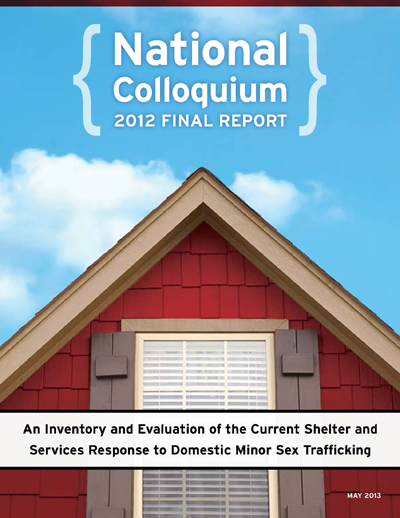
On July 8, a briefing was held in Washington DC, to discuss the results of the National Colloquium on Shelter and Services for Domestic Minor Sex Trafficking Victims. The event was organized by Shared Hope International, and presented by Congresswoman Linda Smith, President and Founder. The live streamed event was held in coordination with Senators Portman and Blumenthal, Co-Chairs of the Senate Caucus to End Human Trafficking; Reps. Ted Poe and Jim Costa, Co-Chairs of the Congressional Caucus for Victims' Rights and Represenitives Jaime Herrera Beutler and Donna F. Edwards, Co-Chairs, and Reps. Kristi Noem and Doris O. Matsui, Vice-Chairs of the Congressional Caucus for Women's Issues. Participants discussed trends and obstacles in establishing treatment facilities for underage victims of sexual exploitation and trafficking.

The National Colloquium Report provides policy makers, government agencies, service providers, and law enforcement with an overview of current services and shelter delivery models. Due to the nature of the crime of commercial sexual exploitation of children, we all know that multiple systems interact with child victims and collaboration is critical among law enforcement, child welfare agencies, and other first responders.

Among the issues discussed was the current status of providers of shelter and victim services for youth victims of domestic minor sex trafficking within the United States, and the glaring lack of beds -there are currently only 226 beds available to youth victims of sex trafficking in the U.S. Also acknowledged were the community-based service providers, which, according to the report, can offer space for up to 1,684 minor victims of sexual exploitation. These numbers are an important indicator that the US has grown in the capacity to provide service to victims, but also have improvements to make. The Executive Director went on the address issues with services and shelters that were identified in the report, one being the geographical disparity between high-traffic areas and the locations of service providers.

The report shows that of practitioners providing direct services reported they receive referrals from juvenile probation from child protective services, and law enforcement. In addition, three national surveys for providers, survivors, and advocates and funders were developed and distributed and over 100 expert individuals and organizations completed the surveys. Responses were collected from 51 organizations, 33 survivors and 18 national advocacy and funding experts. The report includes 26 specific recommendations in 5 categories: Placement and services for identified youth, Licensing and maintaining shelter and programs, Identifying sustainable resources, Programmatic/therapeutic responses, and Safety and security recommendations

Click here to read the full report!

Monday, July 15, 2013

Modern Slavery News Round-Up

Feds Arrest 255 in Massive Global Child Porn Sting 
As part of its attempt to combat a growing trend of online sexual exploitation, the U.S. Immigration and Customs Enforcement agency announced on Monday that 255 suspected child predators had been arrested during a nearly five-week sting operation. Operation iGuardian sought to identify and arrest those who allegedly "own, trade and produce" child pornography in the United States and its territories. Authorities also identified and rescued 61 alleged victims in the United States, Canada, Indonesia and the Netherlands, according to a statement from ICE. The suspects, 251 of whom were men and four were women, face charges ranging from online sexual enticement of a minor to child pornography production and traveling with the intent to have sex with a minor. Some were also charged with rape and molestation and distribution of child pornography. Read more here.

Saudi Princess Charged With U.S. Human Trafficking 
Suitcase in hand, the 30-year-old domestic worker from Kenya managed to flag down a Southern California bus and tell a passenger she had been held against her will and believed she was a victim of human trafficking. It wasn't long before a Saudi princess was under arrest. Meshael Alayban, who prosecutors said is one of the wives of Saudi Prince Abdulrahman bin Nasser bin Abdulaziz al Saud, was charged Wednesday with human trafficking. She was arrested at an Irvine condominium that policed searched after talking to the Kenyan woman. The woman told authorities she had been hired in Kenya in 2012 and taken to Saudi Arabia, where her passport was immediately taken. She said she was forced to work excessive hours, was paid less than promised and was not allowed to leave. Read more here.

 Utah Massage Parlor Owner Sent to Prison for Human Trafficking 
A Salt Lake City massage parlor owner has been sentenced to prison for coercing a 17-year-old girl into being a prostitute. Luis Daniel Arano-Hernandez, 30, in May accepted a plea deal and pleaded guilty to one charge of human trafficking, a first-degree felony. Third District Judge Judith Atherton sentenced Arano-Hernandez to five years to life in prison on Friday. Arano-Hernandez, along with three other men and one women, were arrested and charged last November by the SECURE Strike Force after an eight-month investigation into sex trafficking. The women engaged in providing prostitution services are believed to have been undocumented immigrants and/or under the age of 18. In a probable cause statement filed with the court, a female identified as "M.R." said she was forced to sign a contract and that Arano-Hernandez threatened to harm the teen’s family and have her deported if she failed to participate in prostitution. Read more here.

 Federal Judge Blocks N.J. Human Trafficking Law Targeting Underage Sex Ads 
A new state law intended to root out online advertisements for underage sex has been blocked by a federal judge. The law -- signed by Gov. Chris Christie in May and slated to go into effect at the beginning of this month -- makes it a first-degree crime to knowingly publish, disseminate or display an advertisement and any photographs promoting sex with a minor. Backers of the measure said it was needed to hold websites responsible for perpetuating child sex abuse and underage prostitution. Two web companies sued last month claiming the state law, while well-intentioned, violates a long-standing federal law that grants websites sweeping immunity from being held liable for the material people post online. U.S. District Judge Dennis Cavanaugh temporarily blocked New Jersey’s law June 28, and the state faces a steep legal climb when oral arguments begin in Newark on Aug. 9. Read more here.

S. Korean Court Orders Nippon Steel to Pay for Forced Labor 
A South Korean court, in an unprecedented ruling, ordered Japan's Nippon Steel & Sumitomo Metal Corp. on July 10 to compensate four South Koreans for forced labor during Japan's 35-year colonial rule of Korea. The Seoul High Court ordered the company to pay 100 million Korean won ($88,000) to each of the four plaintiffs. It rejected Nippon Steel's argument that it was a different entity from the steelmaker that employed the South Koreans. Japanese courts have thrown out claims by South Korean who suffered at Japanese hands during World War II, arguing the matter of compensation was closed under the 1965 treaty between the two countries normalizing diplomatic ties. Nippon Steel, which merged with Sumitomo Metal Industries last year, has argued in previous court cases that it was not responsible for the actions of the wartime steelmaker. The attorney for the plaintiffs, Kim Mi-kyung, said they had no immediate plans to take action to seize company assets in South Korea, but wanted to discuss compensation with the company. Nippon Steel said it would appeal the decision. Read more here.

Tuesday, July 2, 2013

Commercial and Billboards in Texas Seek to Impact the Demand for Sex Trafficking


Earlier this year Huston, Texas based, Free the Captives, launched the “Reducing the Demand” campaign, targeting the Johns.  The campaign then went to work producing billboards and a Radio and TV commercial targeting Johns, who purchase sex, to highlight the realities of sex trafficking and debunk the myths that have continually plagued victims and advocates.  The PSA's are now up and beginning to air and; the video features, Sheriff Garcia, whose stern and strong presence makes it clear that men who purchase women and girls for sexual -or any other- purpose, will no longer be tolerated in Harris County, Texas.  Please watch the video PSA "Buyer BEWARE: You will be Arrested! (The Realities of Sex Trafficking)" Commercial and Billboards in Texas Seek to Impact the Demand for Sex Trafficking below:


These PSA's and billboards make it clear that when you buy sex you are fueling human trafficking, and we how to see more incentives like this sweeping the country.  

Texas has once again taken a great step in the state level fight to end national and global human trafficking.  More calls come from Texas to the National Human Trafficking Hotline than any other state, due to the great incentives put into place including the use of billboards and campaign efforts by Huston Rescue and Restore.  

The first step to ending human trafficking and modern slavery is to end demand!  Please share these resources to help open the eyes of others and see we put an end to the enslavement of innocent men, women and children once and for all.

Monday, July 1, 2013

Modern Slavery News Round-Up

20 Million People Are Trafficked in Modern Day Slavery – America is Leading the Fight to Stop It
One in three. That’s the number of women who will be sexually assaulted in their lifetimes, according to the United Nations. Depending on where they live, nearly three in five women will at some point endure physical violence. Of course, statistics don’t do justice to how brutally commonplace the occurrence of violence against women and girls is, whether in public or private spaces. The sad reality is these stories are reported in the news every day, all over the world in great detail from horrors in Delhi, India to Steubenville, Ohio. Unfortunately, these same news stories include messages of victim blaming, arguments of consent, and junk science meant to invalidate the seriousness of these crimes.

Arrest Made in Modern Slavery Case Involving a Mentally Disabled Women.
 A mentally disabled woman and her daughter were held in an Ohio apartment crowded with people and animals for more than a year, forced to perform manual labor and threatened with dogs and snakes to keep them compliant, authorities said Tuesday.Federal prosecutors said the people accused of holding the pair in Ashland, about 60 miles south of Cleveland, collected the woman's government benefits and beat her in order to get painkillers for themselves. They kept her in a room with a free-ranging iguana and ordered her to feed the reptile fruits and vegetables her daughter was denied, according to court papers. Sometimes their captors' pit bulls got table food while they had to eat from cans, according to an arrest affidavit quoting witnesses. Local news shows captivating images of the traffickers, To view  Click Here

Child Minors Face Death for Tech 
Roger-Claude Liwanga is a human rights lawyer from the Congo and visiting scholar at Boston University. He worked for The Carter Center as a legal consultant, where he developed a training module to train Congolese judges and prosecutors on the protection of children against trafficking for economic exploitation in the mines. He is also the co-founder and executive director of Promote Congo, and is currently directing and producing a short documentary, “Children of the Mines,” which will be launched shortly in Boston. He writes in his personal capacity.

Compiled By: Markesha Fantroy


Monday, February 25, 2013

Modern Slavery News Round-Up

Global development podcast transcript: ending gender violence
Next month's meeting of the United Nations Commission on the Status of Women will bring together nearly 6,000 leaders from civil society to address ways to eliminate violence against women and girls, said Lakshmi Puri, deputy executive director of UN Women. About one-third of the delegates will be from grass-roots organizations, which Puri said means that "what is accepted here globally by member states will be implemented at the regional level, national level and at the local level.

'It was like dying': a raped woman in Congo DRC speaks out Mark Tran interviews female rape survivors at a rehabilitation center in the Democratic Republic of Congo, where more than 200,000 women have been sexually assaulted since 1998, according to the United Nations. Tran also interviews a former child soldier who says he was forced to rape women by militia commanders. Marie was 13 when she and her mother fled their village as it was attacked by Rwandan Hutu militia, but they were caught. Marie was taken into the bush where she spent eight months being repeatedly raped. Marie. Now 26, this softly spoken woman lives with other abused women at a rehabilitation center outside Goma, the main city in eastern Democratic Republic of the Congo. Heal Africa , where Marie receives support, life and job skills; says the number of women and children raped rose sharply last year because of a surge in rebel militia activity. It registered 2,517 cases in the first half of 2012.

Irish leader apologizes for infamous Magdalen laundries Irish Prime Minister Enda Kenny offered an emotional apology Tuesday for government involvement in a harsh system of laundries run by Roman Catholic nuns, where women and girls labored long hours behind locked doors, unpaid and often bewildered about why they were there. The apology came two weeks after a report found that the Irish government had been involved in the infamous Magdalen laundries, helping to send girls and women into the workhouses, paying them through government programs and contracts, and bringing runaways back in the hands of police. The report painted a picture of a punishing regime of work and prayer, imposed on women and girls who felt trapped, often told little or nothing about why they were at the laundries and when they could leave. More than 10,000 women worked in the laundries between 1922 and 1996, it found.

Myanmar lauded for child soldiers' release The release of 24 child soldiers from Myanmar's military should help the country reach its vow to end child rights violations sooner, the United Nations said. The two dozen children were officially discharged Monday at a ceremony in Yangon, attended by senior officials of the armed forces, known as the Tatmadaw, and government and U.N. officials, UNICEF said in a release. In June, the United Nations and the Myanmar government signed an action plan establishing a timetable and measurable activities for the release and reintegration of children associated with armed forces, as well as the prevention of similar recruitment in the future. Myanmar is one of 14 countries with armed forces or armed groups identified as committing grave child rights violations that is working with the United Nations to end grave violations against children in situations of armed conflict.

Monday, February 11, 2013

Modern Slavery News Round-Up

International Tour Management Institute Signs Tourism Child-Protection Code of Conduct
At the International Tour Management Institute's (ITMI) 26th Annual Symposium, ITMI became the first travel and tourism institute to sign the Tourism Child-Protection Code of Conduct. Last year, ITMI incorporated human trafficking training into their curriculum. All graduates of the program are educated on the issue, the signs of trafficking, and empowered to report suspected incidences to the proper authorities.

UN Conference on the Rights of the Child gives concluding remarks on the Optional Protocol on the Sale of Children
The United Nations gave their concluding observations on the second periodic report of the United States of America to the Committee on the Rights of the Child on the Optional Protocol on the sale of children, child prostitution and child pornography, adopted by the Committee at its sixty-second session (14 January-1 February 2013), how the U.S can improve its protection of children covered under this protocol. The recommendations state how the U.S. government can do a better job in protecting children from sexual exploitation and come from a review of the government’s report and additional conversation and between the US and the UN Committee on the Rights of the child in January.

150 years after U.S. emancipation, slavery isn’t over
This January marked not only the 150th anniversary of the Emancipation Proclamation, but also the third annual National Slavery & Human Trafficking Prevention Month. The presidential proclamation began in 2011 as a way for the administration and human rights groups to raise awareness of what President Obama has called “a crime that amounts to modern-day slavery.“ There are more people living in bondage today than at any other time in human history. The market value of a trafficked human life has decreased from the equivalent of $40,000 in today’s dollars in the mid-nineteenth century American South, to about $90 today. The number of human trafficking cases in the U.S. has more than doubled since 2007, according to the FBI.

Apple's Child-Labor Problem Runs Deep
Apple has released its 2012 Supplier Responsibility Report, which claims to have found no underage workers in "any of our final assembly suppliers." But Apple's supply chain goes much deeper than that, and what the company found in the supply chain of its suppliers — the places that send Foxconn parts — came out less clean. "In many of the cases of underage labor we’ve discovered, the culprit behind the violation was a third-party labor agent that willfully and illegally recruited young workers," explains the report. In one plant that makes circuit-board components, Apple's auditors found 74 cases of workers 16-years-old and younger. Another huge labor agency, Quanshun Human Resources, forced parents of young children to forge papers in order to cover for its underage workers. While 95 percent of the factories Apple audited had no signs of child labor, the other 5 percent include more sordid stories.

King County of Seattle Displays Awareness of Human Trafficking on Its Billboards
In early February, King County of Seattle unveiled billboards that increase awareness of Human Trafficking along the Interstate-5 corridor, in Kent and Tukwila as well as Tacoma, Mill Creek and Bellingham. The ad space, donated by Clear Channel Outdoors, advertises a national hotline and message to reach out to victims, potential victims and the public about where to turn for help on its 15 electronic and traditionally displayed billboards. The ads, in eight languages, encourage people to call the National Human Trafficking Resource Center hotline at 1-888-3737-888 if they suspect someone may be a victim of human trafficking or if they are victims. Similar ads are being displayed on Metro Transit buses and on county websites and other resources. Clear Channel Media & Entertainment also airs public service announcements on their radio stations throughout the region as part of their $88,000 contribution to the awareness campaign.

Friday, February 8, 2013

Myths and Realities of Human Trafficking


The reality of Human Trafficking is that it occurs in nearly every country and its networks are vast and difficult to investigate. According to the United Nations, there are between 27 and 30 million slaves in the world. The U.S. State Department cites that 600,000 to 800,000 people are trafficked across borders every year, but these numbers are often under-reported and victims are usually hidden, meaning that real statistics are hard to substantiate. This also means that there is a vast amount of incorrect information out there, which fuels the myths about human trafficking.

The most common myths are listed below and are further discussed by a contributor to Forbes' The Daily Muse:
  1. Myth - Human Trafficking and Human Smuggling Are the Same
  2. Myth - Most Traffickers Are What the Movies Show You
  3. Myth - Human Trafficking Only Refers to Forced Prostitution
  4. Myth - Only Women Are Trafficked
  5. Myth - Everyone Trafficked is Kidnapped or Deceived
  6. Myth - Trafficking Only Happens in Other Countries, Not in the United States
While the quest to better understand human trafficking seems a formidable task, the more you learn the more you are armed with the facts to better educate yourself and others, while being better equipped to take action against this global problem that reaches to our very own neighborhoods.

Sources: Forbes, The Daily Muse, "Human Trafficking: The Myths and The Realities"

Tuesday, December 4, 2012

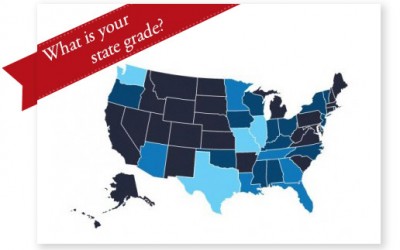
What Grade Did your State Get for Bringing Justice to Victims of Sex Trafficking this Year?


The fight against modern slavery is global and effects every race and age, however those most at risk for exploitation are children, including those right here at home. Despite great efforts and awareness all too many eyes remain closed to the realities of modern slavery and the innocent victims it holds in it's relentless grasp. One child victimized by the unspeakable acts of sexual exploitation and human trafficking is too many. Nonetheless every year in the United States, experts estimate at least 100,000 children -that is some 274 children a day- are exploited in the U.S. commercial sex industry. The average age of a child when they are first sexually exploited through prostitution is only 13 years old.

Last week on, On November 29, Shared Hope International released its 2012 Protected Innocence Challenge. “The Protected Innocence Challenge is a comprehensive study on existing state laws designed to inspire and equip advocates. Under the Challenge, every state receives a Report Card that grades the state on 41 key legislative components that must be addressed in state’s laws in order to effectively respond to the crime of domestic minor sex trafficking. In addition, each state receives a complete analysis of this 41-component review and practical recommendations for improvement.

DID YOUR STATE MEET THE GRADE?
Sadly no States received an A and more States received an F than any other grade, with nearly as many coming in with a D, it has left us with 69% of our States failing to even reach the C mark.
A (0)
 B (7) – FL, GA, IL, LA, MO, TX, WA
C (9) – AK, AZ, IN, MA, MN, OH, OK, TN, WI
D (17) – AL, CO, DE, IA, KY, MD, MS, NE, NJ, NV, NY, NC, OR, RI, SC, UT, VT
F (18) – AR, CA, CT, DC, HI, ID, KS, ME, MI, MT, NH, NM, ND, PA, SD, VA, WV, WY 

Despite the low rankings among the majority of States, this years report card showed significant improvement -though States have a long way to go.
  • 15 states improved their grades from 2011 
  •  2 states went up two grades: AK and MA went from F to C 
  • 13 states went up one grade:
    • 3 new “B” states: LA, FL, GA 
    • 6 new “C” states: AK, IN, MA, OH, OK, WI 6 new “D” states: CO, MD, NE, NV, SC, UT
  • 7 states improved their Protected Innocence Challenge scores by 10+ points:
    •  MA went up 29.5 pts 
    • WV went up 21 pts 
    • LA went up 17 pts 
    • SC went up 17 pts 
    • AK went up 14.5 pts 
    • OH went up 12 pts 
    • WI went up 10 pts 3. 
Each State was scored based on six categories of law; states have achieved perfect scores in sections 1 and 6, with “near perfect” scores in the other areas of law:
  1. Criminalization of Domestic Minor Sex Trafficking: IL and TX have perfect scores (10 points possible) 
  2. Section 2 Criminal Provisions Addressing Demand: LA now has a “near perfect” score with 24.5 points (25 points possible) 
  3. Criminal Provisions for Traffickers: MS, KY, FL and AL have a “near perfect” score with 14.5 points (15 points possible) 
  4. Criminal Provisions for Facilitators: LA and WA have a “near perfect” score with 9.5 points (10 points possible) 
  5. Protected Provisions for Child Victims: IL is the closest to a “near perfect” score with 24.5 points (27.5 points possible) 
  6. Criminal Justice Tools for Investigation and Prosecution: AL, MN, OH and TX have perfect scores (15 points possible) 4. Most Improved = MA 5. Highest Score = LA 6. Worst score = WY 
Looking at legislative progress over the past year, since the release of the 2011 Protected Innocence Challenge:* 
  • 240 state and 38 federal bills were introduced which relate to domestic minor sex trafficking. 
  • 78 laws were passed that relate to domestic minor sex trafficking. 
  • 40 states had legislation introduced that relates to the Protected Innocence Framework. 
  • 33 states enacted legislation related to the Protected Innocence Framework. 

The release of the Protected Innocence Challenge report was done in conjunction with Sharing the Hope 2012 in Washington, DC, a three-day event which included community and law enforcement training and the National Colloquium -a forum of national experts on the issue of shelter and service provisions for child victims of human trafficking.  The final day of the event cumulated with the Sharing the Hope Gala and Pathbreaker Award Ceremony honoring Ernie Allen, President and CEO of the International Center for Missing and Exploited Children; Drew Oosterbaan, Chief, Child Exploitation and Obscenity Section (CEOS) of the U.S. Department of Justice; Amy O’Neill Richard, Senior Advisor to the Director in the State Department’s Office to Monitor and Combat Trafficking in Persons; and Deborah Richardson, Executive Vice President of the National Center for Civil and Human Rights.

The full report can be found and downloaded here.

*Statistics are based on Congressional Quarterly State Track accounting for legislation introduced or passed between August 1, 2011 and August 1, 2012.

Friday, November 23, 2012

Fact: $90 is the average cost of human slave sold around the world


The average price of a slave has decreased during the past 200 years, according to Kevin Bales. a leading abolitionist and the President of Free the Slaves, who has written several books about modern-day slavery. In 1809, the average price of a slave was $40,000 when adjusted to today's money. In 2009, the average price of a slave was $90, Bales says.

In 1850 it was difficult to capture a slave and then transport them to the US. Today, millions of economically and socially vulnerable people around the world are potential slaves. This "supply" makes modern-day slaves  more inexpensive than they have ever been. Since they are so cheap, slaves today are not considered a major investment and thus not worth maintaining. Therefore if slaves get sick, are injured, outlive their usefulness, or become troublesome to the slaveholder, they are dumped or killed.

Modern slavery is directly connected to the global economy, as most slaves were forced to work in agriculture, mining, and prostitution. From these sectors, their exploited labor flows into the global economy, and into our daily lives.  

Source: here

Friday, September 14, 2012

FACT: More than 13 Million Children are Human Trafficking Victims


There are an estimated 27 Million people around the globe who are the victims of human trafficking; of these more than half -over 13 million- are children.

Why are so many children being trafficked today, and where do they come from? Victims of child trafficking exist in every corner of the globe. International victims are lured by traffickers who offer promises of a better life, work opportunities or a chance to live in a more democratic and free society. Some families, desperately poor, are willing sell one of their children as a sacrifice for the rest of the family.

Contrary to a common assumption, human trafficking is not just a problem in other countries. Human trafficking have been reported in all 50 states, Washington D.C., and some U.S. territories. Domestic child trafficking victims are most commonly trafficked into sexual servitude -forced prostitution- as they are often "wooed" by men -or women- who prey on their vulnerabilities and often lack of a father figure.

Family members, acquaintances, pimps, employers, smugglers, and strangers alike traffic children. They all prey upon the children’s vulnerabilities – their hopes for an education, a job, or a better life in another country. However the reality of these promises are a far cry from the promise of freedom, or an escape from poverty and hardship. Traffickers use psychological intimidation or violence to control the children and gain financial benefits from their exploitation, as the children are forced into prostitution, trained to kill in child armies, forced in to situations of harsh labor, etc. These innocent victims of physical, sexual and psychological exploitation are literally robbed of their childhoods -that which is rarely recovered- and treated as a commodity.

Monday, August 27, 2012

The Candy Shop and Broken Dolls

Last week Elyse Elder posted, Fairy tales are battling child exploitation, on the eyeopening awareness short film, The Candy Shop, which we both watched together in the office.  As we watched the piece I was instantly blow away at the depth and artistic twist this short film, which Elyse's boyfriend -a horror film fanatic- stumbled across on YouTube.  The film was not the horror film he had expected, but it was a horror indeed and creeped him out more than most of the cinematic horrors he is used to watching.  As the storyline unfolded the films ere story turned into a nightmare that wasn't the unrealistic nightmare it appeared to be, but the hanis reality of little girls across the country. 

As I watched the film I was instantly carried back in time to childhood as the fairy tale like story began to unfold, however this Willy Wonka character, the Candyman-who's outlandish attire even resembled the glamorized version of an American Pimp- is in a business of satisfying grown men with tasty 'candy' treats. 

As the film unfolded it not only addressed the lost innocence of the Canyman's young victims, but that of the issue of demand for 'candy' that fuels the growing industry that exploits children.  The film's ending is bitter sweet as the not only are some of the 'lollipops' unable to be turned back into little girls, as they are 'too broken'- it also show how putting an end to one 'Canyman's' business is not enough as demand only finds it's way into a new location -reminding me of the endless fight to shut down Korean 'massage parlors' -brothels- we have fought so tirelessly in DC which would often just reemerge a few weeks later or move to Virginia.

Following the film I went rummaging through my old poetry and writings as I vaguely remembered using a similar creative analogy to sex trafficking years ago.  After a bit of searching I found what I was looking for, only it wasn't about a 'candy shop', but a 'doll shop' -though the symbolism and lost innocence parallel.

Broken Doll 
Frank Horvat: Broken doll at flea market, Paris, 1958 
She sits upon the shelf with all the other dolls, smiles painted across their faces, long lashes made to flutter.
Their pretty dresses positioned just right So beautiful and delicate they look upon the shelf.
Each one quietly waits for their buyer to take them home.
  One day the big man comes in, he looks at each little doll searching for the perfect toy to take home And then he sees her... He takes her from the shelf, “This one will do.” 
 Once at home she is no longer placed upon a shelf for one to look at.
She is placed upon the cold bed and positioned every which way the man likes.
Soon the man tires of his doll and he shares her with all his friends and she becomes every one's toy.  Her dress becomes tattered, her body bruised and worn.
But her smile remains firmly painted on her face Tossed around the bed like a rag doll, until she is thrown out with all the other broken dolls.
So many broken dolls... 
So many painted smiles hiding needless pain.
Cassandra Clifford (c)2008
While the film and poem take an artistic approach to opening one's eyes of the horrors of minor sex trafficking he real story is even more ghastly, as some 27 million persons are victims of modern slavery -including the sexual exploitation of young girls and boys. In the United states alone nearly 300,000 are estimated to be at risk for sex trafficking. According to the 2009 National Report on Domestic Minor Sex Trafficking, by Shared Hope International there are 100,000 children in the U.S. victimized each year.

Wednesday, August 22, 2012

Fairy tales are battling child exploitation

I walked into the office Monday morning ready to share with my boss, Executive Director Cassandra Clifford, a movie trailer I had seen the night before titled The Candy Shop. I literally knew nothing about it except what a friend had told me: "I found this creepy video on YouTube and it's about child sex trafficking."  Always an iffy situation, I was hesitant to check it out, but after seeing the trailer I decided it was worth sharing.  In lieu of answering emails, Cassandra and I settled in with our coffee to watch the 30 minute film.  What we saw was an eye-opening cinematic portal of domestic minor sex trafficking hidden beneath the cloak of a horror film.

With the support of Street Grace and 12Stone Church, director Brandon McCormick created a fairy tale parable to raise awareness to the issue that Georgia is a city with some of the highest numbers of child sexual exploitation in the world.  Doug Jones (Hellboy, Pans Labyrinth) plays a terrifying and twisted Willy Wonka-type character who lures young girls into his shop where he then uses his "machine" to turn them into lollipops for older men to buy and enjoy.  See the correlation?  It's up to young Jimmy, played by Mattie Liptack, to battle the shopkeeper and save the girls.  

The film is only 30 minutes long, but it demonstrates new creative wave that is being employed to grab the public's attention to this tragedy that can be found not only in Georgia, but in every major urban center in America.  At least 300,000 children are being prostituted a year in the United States.  As the shop keeper says..."if there wasn't such a need, there wouldn't be so much business."  In the film, Jimmy has the opportunity to save most of the girls, but he finds there are some "lollipops" that just can't be turned back; they're just too broken.  While this film may look like a horror flick at first glance - the world of modern slavery is a true life horror story that never ends for it's victims and survivors- .

Step outside of yourself, dare to be uncomfortable.  Watch this short film and share with friends and family.  With so much evil right outside, in your city, there is no choice but to open your eyes.  


Sunday, August 19, 2012

Another Victory: New State Joins in Vacating Convictions for Victims


Prostitution convictions for victims of forced prostitution and sexual exploitation are sadly all too often common aspects of human trafficking -modern slavery.  Recently, Hawaii joined a small group of states who have passed legislation which will vacate prostitution convictions for victims of human trafficking. Hawaii's new law -SB 2576- “allows sex trafficking victims to vacate prostitution convictions from their criminal records by proving they were sexually enslaved”. Additional states with similar legislation include New York, Illinois, and Nevada; New York was the first state to enact such a law. While this is good news for many survivors -who find it increasingly difficult to attain or retain employment due to this such unjust and misunderstood convictions- there are a few criticisms. One argument questions “how useful a bill like SB2576 would be to many victims on a practical level […saying] that many victims are too afraid of their traffickers to testify against them to prove their victim status. Therefore, a vacating conviction law has no value to victims if it requires them to prove their sex trafficking history by testifying against traffickers” (Dale). Unfortunately, it seems that similar issues will arise in many cases of “vacating convictions” laws, as they do with cases of sexual assault and rape. In rape cases, it can be very difficult to prove that the incident occurred, in addition to the psychological turmoil of reliving such a traumatic event. Victims are often accused of provoking their attackers or of lying. The few cases in which it is later revealed that the victim was not actually a victim certainly does not help. In the same instance, victims of human trafficking/modern slavery endure the same fate as victims of rape. Their lawyers must prove, beyond a reasonable doubt, that they were trafficked and the victim has to relive that time in their life. In addition, there is the possible accusation that they are lying or that they were voluntary participants. Regardless of criticisms, many individuals and organizations view SB2576 and similar legislation, as a victory for victims. It is a new change and another chance for them to reintegrate into society with a clean slate. Dale, Youngbee. "Hawaii: New Law Allows Trafficking Victims to Vacate Prostitution Convictions." Washington Times Communities. N.p., 11 July 2012. Web. 27 July 2012.

Written by: Whitney Joseph