Welcome to the Bridge to Freedom Foundation Blog


Thank you for visiting the Bridge to Freedom Foundation (BTFF) blog, where we look forward to bringing you inside information on the inner-workings of BTFF, inside information on our volunteer team and leadership, in-depth coverage of BTFF and partner events, news and happenings from across the globe and so much more.

Learn more about Bridge to Freedom Foundation and how you can help on the BTFF website. We do hope you will subscribe to and follow our blog and please e-mail us at blog@btff.org if you have any feedback, ideas or contributions.

Thank you for your support!
Cassandra Clifford
Executive Director and Founder of BTFF
Showing posts with label Shared Hope International. Show all posts

Thursday, July 25, 2013

Report Highlights the Lack of Beds for Domestic Minor Victims of Sex Trafficking

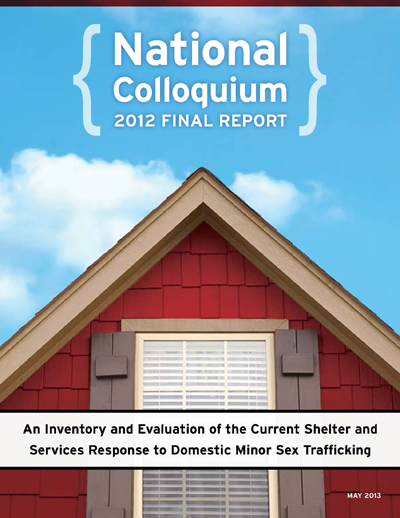
On July 8, a briefing was held in Washington DC, to discuss the results of the National Colloquium on Shelter and Services for Domestic Minor Sex Trafficking Victims. The event was organized by Shared Hope International, and presented by Congresswoman Linda Smith, President and Founder. The live streamed event was held in coordination with Senators Portman and Blumenthal, Co-Chairs of the Senate Caucus to End Human Trafficking; Reps. Ted Poe and Jim Costa, Co-Chairs of the Congressional Caucus for Victims' Rights and Represenitives Jaime Herrera Beutler and Donna F. Edwards, Co-Chairs, and Reps. Kristi Noem and Doris O. Matsui, Vice-Chairs of the Congressional Caucus for Women's Issues. Participants discussed trends and obstacles in establishing treatment facilities for underage victims of sexual exploitation and trafficking.

The National Colloquium Report provides policy makers, government agencies, service providers, and law enforcement with an overview of current services and shelter delivery models. Due to the nature of the crime of commercial sexual exploitation of children, we all know that multiple systems interact with child victims and collaboration is critical among law enforcement, child welfare agencies, and other first responders.

Among the issues discussed was the current status of providers of shelter and victim services for youth victims of domestic minor sex trafficking within the United States, and the glaring lack of beds -there are currently only 226 beds available to youth victims of sex trafficking in the U.S. Also acknowledged were the community-based service providers, which, according to the report, can offer space for up to 1,684 minor victims of sexual exploitation. These numbers are an important indicator that the US has grown in the capacity to provide service to victims, but also have improvements to make. The Executive Director went on the address issues with services and shelters that were identified in the report, one being the geographical disparity between high-traffic areas and the locations of service providers.

The report shows that of practitioners providing direct services reported they receive referrals from juvenile probation from child protective services, and law enforcement. In addition, three national surveys for providers, survivors, and advocates and funders were developed and distributed and over 100 expert individuals and organizations completed the surveys. Responses were collected from 51 organizations, 33 survivors and 18 national advocacy and funding experts. The report includes 26 specific recommendations in 5 categories: Placement and services for identified youth, Licensing and maintaining shelter and programs, Identifying sustainable resources, Programmatic/therapeutic responses, and Safety and security recommendations

Click here to read the full report!

Tuesday, December 4, 2012

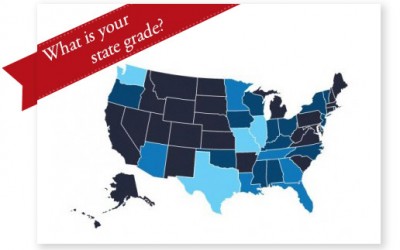
What Grade Did your State Get for Bringing Justice to Victims of Sex Trafficking this Year?


The fight against modern slavery is global and effects every race and age, however those most at risk for exploitation are children, including those right here at home. Despite great efforts and awareness all too many eyes remain closed to the realities of modern slavery and the innocent victims it holds in it's relentless grasp. One child victimized by the unspeakable acts of sexual exploitation and human trafficking is too many. Nonetheless every year in the United States, experts estimate at least 100,000 children -that is some 274 children a day- are exploited in the U.S. commercial sex industry. The average age of a child when they are first sexually exploited through prostitution is only 13 years old.

Last week on, On November 29, Shared Hope International released its 2012 Protected Innocence Challenge. “The Protected Innocence Challenge is a comprehensive study on existing state laws designed to inspire and equip advocates. Under the Challenge, every state receives a Report Card that grades the state on 41 key legislative components that must be addressed in state’s laws in order to effectively respond to the crime of domestic minor sex trafficking. In addition, each state receives a complete analysis of this 41-component review and practical recommendations for improvement.

DID YOUR STATE MEET THE GRADE?
Sadly no States received an A and more States received an F than any other grade, with nearly as many coming in with a D, it has left us with 69% of our States failing to even reach the C mark.
A (0)
 B (7) – FL, GA, IL, LA, MO, TX, WA
C (9) – AK, AZ, IN, MA, MN, OH, OK, TN, WI
D (17) – AL, CO, DE, IA, KY, MD, MS, NE, NJ, NV, NY, NC, OR, RI, SC, UT, VT
F (18) – AR, CA, CT, DC, HI, ID, KS, ME, MI, MT, NH, NM, ND, PA, SD, VA, WV, WY 

Despite the low rankings among the majority of States, this years report card showed significant improvement -though States have a long way to go.
  • 15 states improved their grades from 2011 
  •  2 states went up two grades: AK and MA went from F to C 
  • 13 states went up one grade:
    • 3 new “B” states: LA, FL, GA 
    • 6 new “C” states: AK, IN, MA, OH, OK, WI 6 new “D” states: CO, MD, NE, NV, SC, UT
  • 7 states improved their Protected Innocence Challenge scores by 10+ points:
    •  MA went up 29.5 pts 
    • WV went up 21 pts 
    • LA went up 17 pts 
    • SC went up 17 pts 
    • AK went up 14.5 pts 
    • OH went up 12 pts 
    • WI went up 10 pts 3. 
Each State was scored based on six categories of law; states have achieved perfect scores in sections 1 and 6, with “near perfect” scores in the other areas of law:
  1. Criminalization of Domestic Minor Sex Trafficking: IL and TX have perfect scores (10 points possible) 
  2. Section 2 Criminal Provisions Addressing Demand: LA now has a “near perfect” score with 24.5 points (25 points possible) 
  3. Criminal Provisions for Traffickers: MS, KY, FL and AL have a “near perfect” score with 14.5 points (15 points possible) 
  4. Criminal Provisions for Facilitators: LA and WA have a “near perfect” score with 9.5 points (10 points possible) 
  5. Protected Provisions for Child Victims: IL is the closest to a “near perfect” score with 24.5 points (27.5 points possible) 
  6. Criminal Justice Tools for Investigation and Prosecution: AL, MN, OH and TX have perfect scores (15 points possible) 4. Most Improved = MA 5. Highest Score = LA 6. Worst score = WY 
Looking at legislative progress over the past year, since the release of the 2011 Protected Innocence Challenge:* 
  • 240 state and 38 federal bills were introduced which relate to domestic minor sex trafficking. 
  • 78 laws were passed that relate to domestic minor sex trafficking. 
  • 40 states had legislation introduced that relates to the Protected Innocence Framework. 
  • 33 states enacted legislation related to the Protected Innocence Framework. 

The release of the Protected Innocence Challenge report was done in conjunction with Sharing the Hope 2012 in Washington, DC, a three-day event which included community and law enforcement training and the National Colloquium -a forum of national experts on the issue of shelter and service provisions for child victims of human trafficking.  The final day of the event cumulated with the Sharing the Hope Gala and Pathbreaker Award Ceremony honoring Ernie Allen, President and CEO of the International Center for Missing and Exploited Children; Drew Oosterbaan, Chief, Child Exploitation and Obscenity Section (CEOS) of the U.S. Department of Justice; Amy O’Neill Richard, Senior Advisor to the Director in the State Department’s Office to Monitor and Combat Trafficking in Persons; and Deborah Richardson, Executive Vice President of the National Center for Civil and Human Rights.

The full report can be found and downloaded here.

*Statistics are based on Congressional Quarterly State Track accounting for legislation introduced or passed between August 1, 2011 and August 1, 2012.

Wednesday, August 8, 2012

“Act”-ing for Children’s Welfare

Rep. Karen Bass
As the popularity of human trafficking grows through supply and demand, governmental and non-governmental efforts to end it also grow. Through such efforts, a link has been found between the welfare system and human trafficking, particularly when it comes to children. Yet, there seems to be a lack of data, research and legislation on these incidents.

One new piece of legislation is on its way to providing a solution for this problem: the Strengthening the Child Welfare Response to Human Trafficking Act of 2011, or H.R. 2730. Introduced to the House of representatives in 2011, this bill is sponsored by Representative Karen Bass of California, and has 21 co-sponsors.

Some of the goals that H.R. 2730 seeks to accomplish include:
  • Guidelines for training child welfare and court employees in "identifying, educating, and counseling children at risk...or who are human trafficking victims who may be in the care of the child welfare system."
  • Guidelines with recommendations on "how state child welfare agencies may prevent children from becoming victims of trafficking."
  • Recommendations on "[updating] licensing requirements...so that...residential facilities or safe havens serving children who are trafficking victims can qualify as childcare institutions."
  • Requiring state [Foster Care and Adoption Assistance] plans to make child welfare agencies classify children receiving assistance for trafficking, reasons for classification, information on each child, and immediate reporting to law enforcement the identity of missing or abducted children receiving assistance.
Non-profit organizations like Safe Horizon are doing what they can to increase the number of supporters. Safe Horizon, which provides support and services for victims of violence and abuse, is the largest victims' service agency in the U.S. Other supporters include Shared Hope International, ECPAT, the Coalition to Abolish Slavery and Trafficking (CAST), and Courtney's House, a partner of the Bridge to Freedom Foundation (BTFF).

Where is the bill now? It has been referred to the Subcommitee on Human Resources. Afterward, it'll make its way to the Senate, then hopefully to the President where it will oficially become a bill!

What can you do? Find out who your representative is and call or write a letter to him or her encouraging them to support H.R. 2730. You can also sign the letter to support H.R. 2730 via Safe Horizon.

By Whitney Joseph

Monday, July 16, 2012

The Cost of Demand

In 2005 Shared Hope International conducted a studied in four separate countries (United States, Netherlands, Jamaica and Japan) to investigate the impact of demand on woman and child who are victims of commercial sex trafficking.  It then turned their results into a 30 minute video titled DEMAND.  It's findings?  Without demand, the 2 million that are currently victims would no longer exist.    But while the solution is seemingly obvious, its implementation is difficult to  incomprehensible. How do we eradicate something that, according to the DEMAND, is affecting every major center, every major city in the United States?

In order to understand demand, one must look not only at the "consumer," but also the seller.  In his article "Understanding the Demand", Kevin Bales reveals that "slaves today are cheaper than at any other time in history."  Whether it's due to an increasingly desperation among third world populations, or high population counts, trafficking people is surpassing drugs and weapons in profits.  Not only is it profitable, but the risk is relatively low cost.  Bales discusses how difficult it is to penetrate what he calls the "wholesale chain."  The web of recruiters, transporters and traffickers is so complex and varying that it's difficult to disrupt them.  This provides a relative safety net for traffickers.  Low cost + low risk = high demand.

The high demand comes not just from the low risk for the seller, but from the low risk to the buyer as well.  There is a legal sex market in the United States with strip clubs, peep shoes and pornography, but Demand says that even legal businesses can become fronts for trafficking by turning a blind eye.  It's close to impossible to ensure that all girls in these venues are "free" and many times, they are underage.

On paper this all makes sense, but it's in reality that things get complicated.  How do we tell the difference? How do we separate the victims from those seeking this lifestyle?  The most basic answer? Education.  If the public chooses to become aware of the issue of modern slavery and learn how to identify victims, this will lead to an increase in reports and apprehensions by authorities."  As Bales puts it: "an increase in risk to the perpetrator will decrease the demand."  Education will also decrease the likelihood that society will be able to rationalize the activity of buying trafficked people.  A strongly negative public attitude toward trafficking would make it prohibitive to buying sex, just for the fact that the consequences for the "product" to be a trafficked woman or child would be so high.  The stronger the attitude, the higher the prosecutions, argues Bales.

Take the first step to saving trafficked women and children buy watching DEMAND and then sharing it with friends and family.  By creating awareness about the cost of buying sex, we can create a force that will lead to better victim identification and international cooperation.  Make the pledge to end demand.  

Tuesday, March 27, 2012

Modern Slavery News Round-Up


Sharp rise in human trafficking in Pakistan
Pakistan’s Sindh Province has recorded a sharp increase in reported cases of human trafficking since the beginning of the year, and the trend could continue unless the authorities take action to contain it, say activists.  Some 190 cases have been reported in the province in the first two months of 2012, according to Zia Ahmeld Awan, chairperson of Madadgaar Helpline, an NGO helping women and child victims of abuse and trafficking.  In 2011, the NGO recorded 288 cases. 
She urged the Pakistani government to devote more resources to fighting trafficking and drafting new legislation to ban it.  Pakistan's largest human trafficking problem, according to the US State Department's Trafficking in Persons report for 2011, is that of bonded labour. 

Spanish police arrest 'bar code pimps' gang
MADRID — Spanish police arrested 22 suspected pimps who allegedly used violence to force women into prostitution and tattooed them with bar codes as a sign of ownership, officials said Saturday. Police are calling the gang the "bar code pimps." Officers freed one 19-year-old woman who had been beaten, held against her will and tattooed with a bar code and an amount of money ($2,650) which investigators believe was the debt the gang wished to extort before releasing her.  Sex is a multibillion-dollar industry in Spain, with colorfully lit brothels staffed mainly by poor immigrant women from Latin America, Africa and eastern Europe lining highways throughout the country. Prostitution falls in legal limbo: it is not regulated, although pimping is a crime. The northeastern city of Barcelona plans to introduce regional legislation in coming weeks banning prostitution on urban streets.


Campaign against child sex trafficking on backpage.com grows stronger
Change.org started an online petition back in 2010 calling for the CEO of Village Voice Media to stop child sex trafficking on Backpage.com, a petition that has reached over 235,000 signatures. Similar campaigns have seen Craiglist shut down their 'adult services' sections in the U.S. and consequently their commercial sex ads from international sites. This Thursday 29th March will see the delivery of these petitions to Village Voice Media headquarters in New York City. 
Shared Hope International are calling on mayors across the country to stand against child sex trafficking and Village Voice Media, the owners of backpage.com. On the campaign website it states "Backpage.com will earn an estimated $25.8 million this year from its adult section, a platform that law enforcement and service providers recognize as a major facilitation tool for pimps to traffic children". They are asking people to contact their Mayor to urge them to take action and their website gives the option of emailing/writing to your local Mayor directly and easily through their website here.


Thai, Australia police bust human trafficking ring
Police in Thailand arrested an Iraqi man and a Thai woman in Bangkok on Tuesday while Australian police arrested four additional men in Sydney and Melbourne.  All are believed to be part of a transnational human trafficking network and the arrests were made as a result of "Operation Arapaima", a yearlong effort to crack down on human trafficking networks in Thailand, Malaysia, Indonesia and Australia, according to Lt. Gen. Wiboon Bangthamai.  A police raid found 16 fake passports in the woman's house that were to be used to illegally  transport refugees to Australia.  The country has become a haven for war-ravaged victims seeking a new life and "the organizers of these ventures are taking advantage of vulnerable people and are putting their lives at risk," says a statement from the Australian Federal Police.

GOP, Dems fight human trafficking by contractors
Legislation named "The End Trafficking in Government Contracting Act" was proposed by a bipartisan group from the House and Senate that aims to cut down on human trafficking by contractors hired by the U.S. military to work in Iraq and Afghanistan.  It is a reaction had by legislators after receiving reports from the Commission on Wartime Contracting that oversea contractors are known to engage in illegal practices after luring workers to work in the area such as seizing passports, engaging in sexual abuse, lying about compensation and keeping workers in a state of indentured servitude.  "Modern-day slavery by governmental contractors-unknowingly funded by American taxpayers- is unconscionable and intolerable," says Sen. Richard Blumenthal (D-Conn), the lead Senate sponsor of the bill.