Welcome to the Bridge to Freedom Foundation Blog


Thank you for visiting the Bridge to Freedom Foundation (BTFF) blog, where we look forward to bringing you inside information on the inner-workings of BTFF, inside information on our volunteer team and leadership, in-depth coverage of BTFF and partner events, news and happenings from across the globe and so much more.

Learn more about Bridge to Freedom Foundation and how you can help on the BTFF website. We do hope you will subscribe to and follow our blog and please e-mail us at blog@btff.org if you have any feedback, ideas or contributions.

Thank you for your support!
Cassandra Clifford
Executive Director and Founder of BTFF
Showing posts with label child brides. Show all posts

Friday, November 1, 2013

Fact: Domestic Violence and Human Trafficking Often Happen to the Same Victim


We have quickly been flying through the Fall season, also the season football and awareness months. October is, was, Domestic Violence, established in 1995 when several organizations, including the Family Violence Prevention Fund and the National Coalition Against Domestic Violence united to raise awareness against this growing -and most often silenced- problem.

Why is a human trafficking organization talking about domestic violence? Human trafficking and domestic violence can occur on a continuum of violence, and the dynamics involved in human trafficking are frequently interwoven with those of domestic violence. This occurs mo Individuals who have suffered violence and discrimination in their countries of origin based on their sex, gender identity, sexual orientation, or dysfunctional family situations are often more likely to overlook the risks of unsafe migration, thus increasing their vulnerability to human trafficking. Traffickers also frequently exploit the already lowered self-esteem of trafficking victims who have experienced abusive family lives. Conversely, trafficking survivors are often vulnerable to future incidences of domestic violence.

The following are examples of cases where domestic violence and human trafficking can manifest together on the basis of the same set of facts:

  1. Involuntary servitude in marriage: Cases where traffickers force their spouses to perform services and labor, such as domestic work, working at family businesses, or sex work. These traffickers may also physically and sexually abuse their spouses, as well as threaten them with immigration and legal consequences. 
  2. Forced prostitution and sex work: Cases where individuals are recruited into sex trafficking by traffickers feigning love interest in them. The cases may involve fraudulent courtship, sexual assault, and then a distinct pattern of domestic violence to control or convince the victims to engage in sex work. 
  3. Other forced labor: Cases where individuals are trafficked by other family members (besides in

Friday, October 11, 2013

International Day of the Girl Child

Today Bridge to Freedom Foundation (BTFF) is proud to celebrate the second annual International Day of the Girl Child. Enacted by the United Nations in 2011, this day offers an opportunity to highlight gender inequality and the fulfillment of human rights for all women and girls -including the elimination of violence.

The International Day of the Girl Child provides not only everyone at BTFF a greater platform to raise our voices and improve the lives of women and girls around the globe, but for you to join us and make your voice heard. It is that reason BTFF is proud to announce the launch of our Violence Prevention Program on this very special day dedicated to girls around the world. Please help us ensure that girls are not only able to lead thriving lives, but are able to walk through their daily lives aware and empowered to fight against violence!

We hope you will join us in honoring the Day of the Girl Child, as well as October being Domestic Violence Prevention Month, by donating to our Violence Prevention / Self-Defense fundraising campaign.  Please click here to see how you can sponsor a free 3 hour workshop for a survivor.

Thursday, September 12, 2013

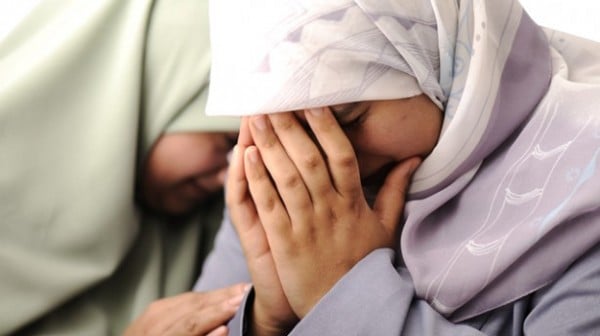
Death of Child Bride in Yemen an All too Familiar Story


The recent story on the child bride in Yemen who was killed has me fired up again, as over the years I have written many times on child marriage across the globe.
"Al Nahar, Lebanon, has reported that an eight year old child bride died in Yemen on her wedding night after suffering internal injuries due to sexual trauma. Human rights organizations are calling for the arrest of her husband who was five times her age" (albabwa).
 Not only have I written countless times on the global plague of child marriage, but even more I have reported on Yemen numerous times since at least 2008, when I published  "Girls in Yemen Forced to Marry too Young".

In 2010 I even reported on a story that almost mirrors the one that is causing global outcries as we speak,  when a 12 year-old child bride died; "Child Marriage in Yemen Turns Deadly" and "Yemen Fights to Ban Child Marriage" just to name a few.

I am truly fired up over this one -not simply because of the shocking and unspeakable nature of the child's death, but as we have sought to speak out for so many years to only have the cries of child brieds in Yemen and across the globe continue to be silenced.  We cannot stand by one more day and ignore these innocent children, most of whom do not have their stories told and not only cry in silence, but who's deaths gain no tears.

 Stay tuned I have a lot more to come and will be writing a new post with a fresh perspective shortly.

Monday, March 11, 2013

Modern Slavery News Round-Up

Third of girls in 42 countries forced in to child marriages
More than one-third of all girls are married in 42 countries, according to the U.N. Population Fund, this in reference to females under the age of 18. The highest number of cases occurs in some of the poorest countries, the agency figures show, with the West African nation of Niger at the bottom of the list with 75 percent of girls married before they turn 18. In Bangladesh the figure is 66 percent and in Central African Republic and Chad it is 68 percent. Child marriage is not common in South Africa, where prosecutors are investigating what charges can be brought in the case of a 13-year-old epileptic girl who was forced to leave school and marry a 57-year-old traditional healer in January. Reducing child marriages is key to achieving U.N. millennium goals to improve child mortality and reduce maternal deaths, according to Malawi's Health Minister Catherine Gotani Hara. She said teen pregnancies accounted for up to 30 percent of maternal deaths in that southern African country.

Human-trafficking bill clears key hurdle in Kentucky legislature
A House bill that would stiffen state penalties for human traffickers and provide more services to trafficking victims, recently took a major step toward becoming law. The measure would add more teeth to Kentucky's 2008 human trafficking law. It would provide more training for law enforcement on human trafficking, allow police and prosecutors to seize assets of those involved in human trafficking, and earmark money from the seized assets to pay for victim services. The bill also allows human trafficking victims to receive treatment rather than jail time, a provision sometimes referred to as safe-harbor protection.

The proposal also would require people to report human trafficking to authorities, an essential provision of the bill, said the bill's sponsors, Rep. Addia Wuchner, R-Burlington, and Rep. Sannie Overly, D-Paris. Since 2008, advocates have treated 101 human trafficking victims, but there have been only 18 prosecutions — 16 using state law and two using federal law. The vast majority of those cases involve the selling of Kentucky children for sex by someone they know.

MS-13 Gang Members Sentenced to Prison on Sex Trafficking Charges
Jonathan Adonay Fuentes, aka “Cheesy” and “Crazy Boy,” 21, of Clinton, Marlyland, was sentenced to 120 months in prison, followed by five years of supervised release, for sex trafficking a juvenile female as part of a prostitution enterprise operated by the violent street gang Mara Salvatrucha Thirteen (MS-13). According to court documents, Fuentes assisted his fellow MS-13 gang members from the fall of 2009 through the spring of 2010 run a prostitution ring that specialized in selling juvenile girls for commercial sex. Fuentes admitted in court that he transported a teen girl within Virginia and Maryland to engage in sex with clients.

This case was investigated by the FBI’s Washington Field Office, with assistance from the Fairfax County Police Department and HSI, all of whom participate in the Northern Virginia Human Trafficking Task Force. Assistant United States Attorneys Zachary Terwilliger and Patricia T. Giles are prosecuting the case on behalf of the United States.

Support bills to fight human trafficking in Connecticut
Connecticut is moving on several parallel tracks when it comes to serving children. Medical, legal, housing and social services are provided through a number of state and non-profit agencies. Several organizations are raising awareness of trafficking with the general public and training law enforcement officials, judges, school officials and others to recognize and report possible cases of human trafficking. And in recent years Connecticut's Legislature has responded by passing several laws related to the care and custody of child victims.

With three bills in total being pushed, one is Senate Bill 45, An Act Concerning Sexual Exploitation and Human Trafficking, is sponsored by Sen. Martin Looney of New Haven. Among other things, it calls for the, "... superior court to freeze the assets of an accused trafficker and require truck stops and liquor permit premises to post the telephone numbers for state and federal anti-trafficking hotlines." 79 cases of potential human trafficking incidents at truck stops across the country were reported in 2011, the latest year for which statistics are available. Although Connecticut is not among the top five states for trafficking incidents at truck stops, all you have to do is travel up and down I-95 in the early morning hours to realize the number of truckers that can be reached with prevention information.

Senate Bill 149 and House Bill 6136,  are the other two bills which appear to be legislation that remit harsh punishment for those persons who are victims of human trafficking. Considering that many of the participants involved in these actions are young and unaware as to how to escape, these bills are an attempt to offer them an escape and new life. All the bills stated are waiting for public hearings to be scheduled.

Friday, March 8, 2013

FACT: More than 140 Million Girls will marry between 2011 and 2020


Between 2011 and 2020, more than 140 million girls will become child brides, according to United Nations Population Fund. Of the 140 million girls who will marry before the age of 18, 50 million will be under the age of 15. Despite the fact that 158 countries have set the legal age for marriage at 18 years, laws are rarely enforced since the practice of marrying young children is upheld by tradition and social norms. Child marriage, which has existed for centuries, is a complex issue, rooted deeply in gender inequality, tradition and poverty. The practice is most common in rural and impoverished areas, where prospects for girls can be limited. In many cases, parents arrange these marriages and young girls have no choice.

Monday, February 4, 2013

Modern Slavery News Round-Up

In Limpopo, the system fails a young girl of thirteen who should be at school, but is sold off as a child bride to a 57-year-old sangoma, a traditional healer, by her struggling single mother of five to pay off supposed mounting bills. Child marriage continues to plague South Africa as in this case where the young child's rights are not protected by the courts who let off the sangoma once it was learned that the family had consented to the marriage.

China's child abduction by traffickers hard to curb leading officials and parents to social media
Despite authorities cracking down over the past two decades, child abduction is tough to eliminate. Officials claim the problem has become less prolific, but given the inconsistencies of data reporting, this is hard to substantiate. But Deng Fei, a Beijing-based journalist and prominent campaigner on behalf of victims and their families, believes the number of children being abducted is decreasing. Social media may have helped to reduce the crimes as in recent years, parents and activists have been using websites and microblogs to share information about cases and draw public attention to child abduction. Their efforts put pressure on the police, who have responded such as Chen Shiqu, the police official in charge of anti-trafficking, who has an account on Sina Weibo, one of China’s most popular microblog services. His account has 3.4m followers.

Syrian Refugee Women Exploited for Marriage
Lina Al Tiby, a Syrian activist living in Cairo, runs a support network for Syrian women refugees; helps them adapt to life in Egypt; and tries to persuade them not to allow poverty to push them into sex work or unwanted marriage. Arriving in Egypt with little more than the clothes they are wearing, some Syrian women see marriage as the only means of survival. "Egyptian men tell Syrian women they will marry them to help them and their families, but… can’t these men help Syrian women without marrying them?" said Al Tiby.

Eliminating human trafficking from the global business landscape
Businesses may unknowingly be associated with the crime of human trafficking when their suppliers, subcontractors, or partners supply materials or products that have been produced by trafficked persons. “In today’s globalized world, the risks of human trafficking in supply chains are significant throughout economic sectors and affect all States,” says Joy Ngozi Ezeilo, UN Special Rapporteur on trafficking in persons...Ezeilo recommends that all global businesses commit themselves to the UN Guiding Principles on Business and Human Rights and become signatories to the UN Global Compact. Ezeilo also urges businesses to exercise due diligence and conduct a risk assessment for their entire production chain in order to eliminate risks of human trafficking in their operations.


U.S. Agents Rescue Sex Slaves Through Data Fusion
Data-mining is proving a key tool for U.S. law enforcement to free sex slaves and to convict human traffickers involved in the $32 billion industry. Immigration and Customs Enforcement (ICE) have rescued sex slaves by using software that identifies geographic locations by syncing financial transactions, phone records and other discordant data, ICE officials said at a Symposium to address immigration-related crime to technology companies; senior federal officials; and actress Mira Sorvino, the United Nations Goodwill Ambassador to combat human trafficking. Angie Salazar, an ICE section chief who investigates human smuggling and trafficking, confirmed that ICE was able to find victims of trafficking by using data to look for trends. Palantir, a data company that assists many U.S. intelligence agencies, helps ICE with investigations by flagging individuals and organizations.


Friday, September 14, 2012

FACT: More than 13 Million Children are Human Trafficking Victims


There are an estimated 27 Million people around the globe who are the victims of human trafficking; of these more than half -over 13 million- are children.

Why are so many children being trafficked today, and where do they come from? Victims of child trafficking exist in every corner of the globe. International victims are lured by traffickers who offer promises of a better life, work opportunities or a chance to live in a more democratic and free society. Some families, desperately poor, are willing sell one of their children as a sacrifice for the rest of the family.

Contrary to a common assumption, human trafficking is not just a problem in other countries. Human trafficking have been reported in all 50 states, Washington D.C., and some U.S. territories. Domestic child trafficking victims are most commonly trafficked into sexual servitude -forced prostitution- as they are often "wooed" by men -or women- who prey on their vulnerabilities and often lack of a father figure.

Family members, acquaintances, pimps, employers, smugglers, and strangers alike traffic children. They all prey upon the children’s vulnerabilities – their hopes for an education, a job, or a better life in another country. However the reality of these promises are a far cry from the promise of freedom, or an escape from poverty and hardship. Traffickers use psychological intimidation or violence to control the children and gain financial benefits from their exploitation, as the children are forced into prostitution, trained to kill in child armies, forced in to situations of harsh labor, etc. These innocent victims of physical, sexual and psychological exploitation are literally robbed of their childhoods -that which is rarely recovered- and treated as a commodity.

Tuesday, August 14, 2012

Syrian refugees struggle to cope and seek child marriage as a solution


Recent concerns have sparked as child marriages spike among Syrian refugees in Jordan. Difficult conditions in Jordan have many parents pushing to have their daughters married at an earlier age. The issue has created a concern among many international aid organizations that the rise in child marriage has been brought on as a sort of coping mechanism to adjusting to life as a refugee in the country. The majority of these young girls are in their early teens and are increasingly being married to older Syrian men as a form of financial and other security against a backdrop of conflict and instability. Early marriage is against the laws of both Syria (minimum age of marriage at 17 for boys and 16 for girls) and Jordan. However, in Syria, religious leaders may still approve “informal marriages” at for girls from 13 years-old and for boys from 16 years-old. The “informal marriages” allows spouses to live in the same home and have children, but is only legally registered once both turn 18. In Jordan the legal minimum age for marriage is 18-years-old for both spouses, though in exceptional circumstances marriages involving 15-year-olds are allowed — it is illegal for anyone under 15 to get married. Hana Ghadban, a volunteer with the Syrian Women Association (SWA), told IRIN that in the Syrian cities of Homs and Dera’a many girls are married at the age of 13 or 14. “We know of so many girls who got married after moving to Jordan. Most of them were engaged in Syria.”
“They rape girls who are as young as her in Syria now. If they raped a nine-year-old girl, they can do anything. I will not feel OK if I do not see her married to a decent man who can protect her,” said the father of Hanadi, a pregnant child bride in Jordan aged 14.
To read the rest of this post by Bridge to Freedom Foundation Founder and Executive Director, Cassandra Clifford on the Foreign Policy Association's Children's Rights Blog here.

Tuesday, May 15, 2012

Modern Slavery News Round-Up

According to a major recent survey by the Ministry of Health, 43% of married women in India in the age group of 20 to 24 had been child brides.  The legal age for a girl to marry is 18, but for uneducated girls the average age is 15.  "There is real competition in law in India, between federal law and the law of custom," says Michele Goodwin, a law professor and expert on child marriage.  Over 70% of young brides said they were married before the age of 18 and, like human trafficking, they had no say in the arrangements and they often experience sexual and physical abuse.  "She is the property of anyone in the household," says Goodwin.  Money exchanges hands in the form of a dowry and once a daughter has been sent off there are more resources left for the rest of the family.  

In a rare show of bipartisanship in Virginia, Republicans and Democrats passed a slate of bills that will combat violence against women and human trafficking and create harsher punishments for criminals who commit these acts.  Three of the slate are aimed at stemming the trend of human trafficking in Northern Virginia where gang members were arrested for trafficking high school girls.  The State Board of Education will have to provide training and materials to local school divisions to help identify and report instances of human trafficking and strips clubs will be required to post the human trafficking hotline number.  "Passing the bills is the easy part," says Sen. Janet Howell.  "Much harder is providing the services to the victims of violent crimes." 

Police arrested a Thai man for selling women as sex salves to Japan last year.  After being rescued in September, three women told police that Chakraphan Wacharaphin has arranged travel documents for them to work in a restaurant in Japan, but they were then forced into prostitution upon arrival.  Chakraphan denies being involved in human trafficking, but he did earn thousands of dollars for arranging the women's visas.  If found guilty, he will face up to 10 years in prison in Thailand.   

Thursday, March 8, 2012

Celebrating Women and Freedom: International Women’s Day


Today, March 8th is International Women’s Day (IWD), which was established to commemorate the struggle women and girls across the globe continue to endure in obtaining their basic human rights. In 2011, the United States made the presidential proclamation that the entire month of March will be Women’s History Month. 2012′s theme is Connecting Girls, Inspiring Futures; by connecting girls with resources to ensure their basic rights, girls will see their potential and future. Inspiring girls’ futures betters the community, the country and the world.

 Each year the United Nations also declares an overall International Women’s Day theme. The UN’s 2012 theme is Empower Rural Women – End Hunger and Poverty. Women and girls in rural areas face the largest disparities and barriers than any other population in the world. Rural women and girls comprise one in four people worldwide. They work long hours with little or no wadges, yet produce a large proportion of the food agriculture. These women and girls are one of the biggest keys in the fight against poverty. “Providing women farmers with equal access to resources would result in 100 to 150 million fewer hungry people. Providing women with income, land rights and credit would mean fewer malnourished children. Studies show that higher levels of gender equality correlate positively with higher levels of per capita gross national product. Opening economic opportunities to women would significantly raise economic growth and reduce poverty,” stated Michelle Bachelet, Executive Director of UN Women, on the importance of addressing this year’s UN theme (UN Women).

 To Read the rest of this post by Executive Director and Founder, Cassandra Clifford on the Foreign Policy Association's Children's Rights Blog please go here.