Welcome to the Bridge to Freedom Foundation Blog


Thank you for visiting the Bridge to Freedom Foundation (BTFF) blog, where we look forward to bringing you inside information on the inner-workings of BTFF, inside information on our volunteer team and leadership, in-depth coverage of BTFF and partner events, news and happenings from across the globe and so much more.

Learn more about Bridge to Freedom Foundation and how you can help on the BTFF website. We do hope you will subscribe to and follow our blog and please e-mail us at blog@btff.org if you have any feedback, ideas or contributions.

Thank you for your support!
Cassandra Clifford
Executive Director and Founder of BTFF

Sunday, February 26, 2012

Modern Slavery News Round-Up


UNICEF fights child marriage in India
Tea estate communities in Assam, in northeastern India, are working with the UN Children’s Fund to deter the early marriage and sexual abuse of children. Girls sometimes begin picking tea leaves as early as 10 years old in the isolated communities, where UNICEF has joined with girls’ groups and the regional Indian Tea Association to reverse gender discrimination.

Venezuela strikes chord with poor children
A 35-year-old social program in Venezuela aimed at alleviating the effects of poverty among children through classical music is inspiring similar programs in other countries, in part through the high profile of one of its products, Gustavo Dudamel, music director of the Los Angeles Philharmonic. El Sistema reaches 310,000 children through 500 orchestras and other ensembles, and aims to instill a sense of community, commitment and self-worth amid lives that are otherwise marked by desperation.


NIGERIA: Calls for more action on child lead poisoning
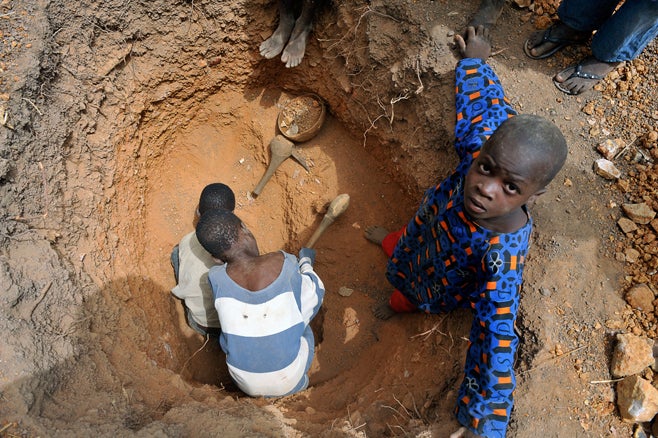
The Nigerian government has stood back and watched while hundreds of children in the northwestern state of Zamfara have died of lead poisoning, and hundreds more been affected by it over the past two years, say rights groups and the local authorities. At least 400 children who had worked in artisanal gold mines were reported to have in 2010, and still the government has taken little action to curb the mining or make communities more aware of its dangers.

UN Pushes for Birth Registration
The UN High Commissioner for Refugees (UNHCR) has announced its partnership with the global children’s rights organization Plan International for a worldwide push to ensure that children, especially those at risk of statelessness, are registered at birth. There are some 12 million stateless people across the world, half of which are children, according to the UN agency. UNICEF estimates that 51 million babies each year, more than two fifths of those born worldwide, are not registered at birth. Furthermore, many parents are not registered themselves, often a requirement for child registration. Halting this vicious cycle is key to ending exploitation and the denial of human rights worldwide.

Thursday, February 23, 2012

The Price of Gold


I spent the other day watching a couple illuminating shows on the price of gold. The first was on Fort Knox and America’s precious national treasure and the second was a historical documentary on gold mining from pre-gold rush until today. It is well known that gold can come at an incredibly high human and environmental cost, but these programs further opened my eyes to the greed and destruction that this mineral has caused through history. What amazes me most is that we have learned so little: gold continues to be coveted at any cost and gold mining isn’t much safer today than it was a hundred years ago.

For thousands of years people have gone to extremes for the sake of gold, traveling the world in search of even a flake of the metal in the dirt, they risk their lives, spend all they have and most end with up with very little, if anything at all. Gold has been used to fuel armed conflicts and conquests, and has been the sole reason to level entire mountains and forests, forever changing the environmental landscape. So if gold causes so much death and destruction than why is it so highly valued? We do not need gold to survive, in reality it has little practical use for mankind, but gold continues to be one of the world’s most desired commodities. In fact, its value seems to be increasing as the global economy remains unstable. On September 10, 2001, they day before the United States terrorist attacks, gold was valued at $271 an ounce, it then hit $1,023 by March 2008, thanks to the recession and decline of the dollar. ”Gold has always had this kind of magic,” says Peter L. Bernstein, author of The Power of Gold. ”But it’s never been clear if we have gold—or gold has us.” Today gold fetches the highest price that is has ever garnered in history. Yet gold comes with another, higher price.

According to a Human Rights Watch (HRW) report released this past December, some 20,000 – 40,000 children work in artisanal gold mines in Mali, Africa’s third-largest producer of this precious and highly coveted metal. The 108-page report, “A Poisonous Mix: Child Labor, Mercury, and Artisanal Gold Mining in Mali,” brought to light the plight of children as young as six years-old who labor in the dangerous mines digging shafts, working underground, and pulling heavy weights of gold ore. Many of these children are placed in even deadlier conditions working with toxic mercury, used to separate the gold from the ore. HRW children’s rights researcher Juliane Kippenberg said children carried loads heavier than their own weight, climbed into unstable shafts, and touched and inhaled mercury. Mercury is especially harmful to young children; it is considered to be one of the most toxic substances on earth as it attacks the central nervous system. Symptoms of mercury poising include impairment of vision, hearing, speech, sensation and a lack of coordination.

Read the rest of this post by our Executive Director and Founder, Cassandra Clifford on the Foreign Policy Association's Children's Rights Blog here.

Thursday, January 12, 2012

Making everyday Human Trafficking Awareness Day

Yesterday was National Global Human Trafficking Awareness Day (NGHTAD) and the buzz against human trafficking was all about. E-mails and 24 hour campaigns were bustling around the Internet, while Facebook was exploding with chatter on what one could do on the day to promote the day.  People across the country were sharing resources and information on how to become more aware, and what one could do to be involved in the global fight to see an end to the enslavement of some 27 million men, women and children who are held by the chains of modern slavery.

However what I want to stress most about NGHTAD, is that this is not a day to be aware, but to get aware, stay aware and act! I hope that people took today, and this national awareness month to learn some of the facts, look into resources, but most of all take tomorrow and thereafter to use them. Sure having a nationally recognized awareness day is great, but it is useless if it just sits there on the books and the only ones shouting from the rooftops about human trafficking/modern slavery, are those who are already standing on the front lines. I can write, type, talk and shout till my fingers go numb and my lungs go dry, but it’s all useless if no one is on the other side listening and learning.

True, an awareness day and awareness month, is great but for those of us in the field every day, every month, every year, is a National and Global Human Trafficking Awareness day. Did I talk more about trafficking today than any other day, yes and no! Sure, I used the day as an opener to talk to people I came across at every corner; the metro, my martial arts studio, cafe, CVS, etc. and I posted flyers everywhere I could, blogged, twittered, and facebooked away every second I could. Therefore while it seems like I was non-stop, and I was publicly so to speak, as were so many others in the field, but the reality is that most of us are non-stop every day. I am famed for my 4am bedtimes, and all too often have had a colleague at another organization say, “You should have called me I was up”, while another is constantly yelling at me that I need to get my rest so we can win this fight as it will take all of us and we need our strength. Thus weather you hear the voices of activist on the front line or not, they are there and they are strong.  Nonetheless the harsh reality is there are far fewer of us than there are victims and survivors to assist. It is for this reason that it is so vital that the fight to combat modern slavery is not that of a day, nor that of a month, but a year long global fight by each and every local and global citizen, that will not end until each victim is rescued and every survivor is in a sustainable and thriving life. It is a long hard road, but it is a fight we can win if we unite to do so.  We all have a role to play…the end to modern slavery is a giant puzzle, and each one of us holds a piece to that puzzle…the puzzle of freedom!

What can you do?
  • Learn more; watch films, read books and websites about Human Trafficking.
  • Tell others about Human Trafficking…your voice is powerful…write, blog, talk!
  • Start or join a student or community organization to raise awareness and learn more.
  • Volunteer or organize a fundraiser with a local organization that works on Human Trafficking or a related cause.
  • Post awareness flyers/posters in your office/school/gym.
  • Buy Fair Trade and Slave Free products as often as you can.
  • Don’t remain silent! Report it! Call the National Human Trafficking Hotline if you suspect any potential cases of human trafficking. (Put the number in your cell phone NOW!): 1-888-3737-888 
It takes all of us to build the bridge to freedom!

Wednesday, January 11, 2012

1-11-12 National Global Human Trafficking Awareness Day


Today is National Global Human Trafficking Awareness Day (NGHTAD), a a day of awareness and vigilance for the countless victims of human trafficking across the globe. Yet President Obama announced that this year, and every year hence forth, January will be known as National Slavery and Human Trafficking Prevention Month (White House).

Therefore use this day and month to take action, promote awareness, and support those who have been victimized by modern slavery. Make this the day that you fight to end a global plague that has stolen the freedoms of some 27 million men, women and children. Be it via the internet or in your own city/town/village across the world, make today a day to remember those who have been victimized by modern slavery and who are unable to govern their own lives. We have it in our power to see that future generations of children are no longer at risk for exploration and slavery. Let us unite to end slavery in our lifetime.
  • There are some 27 million people held in slavery today across the globe. 
  • According to 2009 State Department Trafficking in Persons Report over 80% of those trans-nationally trafficked are women and children. 
  • The U.S. State department estimates that some 800,000 people are trafficked across international borders each year and about 80 percent of them are female and at least 50% are children. 
  • In 1850 a slave in the Southern United States cost the equivalent of $40,000 today. According to Free the Slaves, a slave today costs an average of $90. 

If you suspect a situation or a potential victim, please call the National Human Trafficking Resource Center hotline at 1-888-3737-888 now! We highly recommend you take a moment to place this number in your mobile phones now.


*The awareness poster is available for free download via Bridge to Freedom Foundation, please see there site to download this poster as well as their two other awareness posters.

Wednesday, January 4, 2012

Modern Slavery News Round-Up

Human trafficking cases down in Dubai
Human trade cases recorded in Dubai declined by nearly 50 per cent in 2011 and Asian girls were the main victims last year, according to the general administration for human rights in the emirate. The figures showed the emirate handled 16 human trade cases in 2011, involving 48 defendants and 32 female victims. In 2010, 35 cases were recorded, involving 109 defendants and 76 female victims, the department said. “The decline in human trade cases last year was a result of intensified police campaigns against such crimes and the increase in awareness programmes,” the Administration’s director Colonel Mohammed Al Murr told the Dubai-based Arabic language daily Emirat Alyoum.

Three to eight million people work as bonded labour in Pakistan
Activists from human rights organisations held a protest on December 30, 2011 to show solidarity with bonded labour. The protesters were holding placards and banners in front of Karachi Press Club. They were demanding the government to ensure the labourers got their rights.  According to the Human Rights Commission of Pakistan (HRCP), there are more than three to eight million people working as bonded labour in Sindh and Punjab. They claim that these people work for land lords and brick kiln owners because of debt.

California cracks down on global slave labor
A new California law will force retailers and manufacturers to disclose how they guard against slavery and human trafficking throughout their supply chains, ratcheting up scrutiny of some of the largest U.S. corporations.
Beginning 2 January 2012 about 3,200 major companies doing business or based in California, a list that includes Apple and Gap Inc., will be required to disclose steps they take, if any, to ensure their suppliers and partners do not use forced labor.  Companies risk getting sued by the state attorney general if they flout that law. But experts say the real pressure will come from the court of public opinion: consumers who care about ethical working conditions and take an interest in how their favorite brands get made.

Tuesday, December 27, 2011

Modern Slavery News Round-Up

Groups battle sex trafficking in Atlanta
On average, 100 adolescent girls are sexually exploited for money in Georgia on a typical night, according to a report by the Schapiro Group, an Atlanta-based research, marketing and communications firm. The data reveal that 7,200 men pay for sex with adolescent females in Georgia each month and the largest concentration of men — 42 percent — seeking to pay for sex with adolescent females in Georgia is in the north metro area, outside the Perimeter. Twenty-six percent come from inside the Perimeter and 23 percent from the south metro area outside the Perimeter. Nine percent are from the immediate vicinity of the Hartsfield-Jackson International Airport.

Human trafficking decision will allow class action suits for guest workers, says civil rights groups
A federal judge’s decision to grant class action status to a group of immigrant Filipino teachers who were allegedly duped into forced labor in Louisiana could be used to protect other guest workers in the U.S., said the civil rights group representing the teachers. A recent ruling by federal judge in the Central District of California granted class action status in a human trafficking lawsuit involving more than 350 Filipino teachers is the first time the federal Trafficking Victims Protection Act (TVPA) has been applied to a group of people, rather than just individual victims, said the Southern Poverty Law Center on Dec. 20. The ruling, it said, sets a precedent by showing that the TVPA's legal protections can be applied on a class-wide basis.

Super Bowl attracts human trafficking
As the Super Bowl draws near, one Indiana state senator is looking to close existing loopholes in laws regarding human trafficking and prostitution. Senator Randy Head, a former Tippecanoe County Deputy Prosecutor, said human trafficking will be a major problem as visitors stream into Indiana for this year's Super Bowl. As a former deputy prosecutor for Tippecanoe County, Head said he's seen the type of scars human trafficking can leave on a child.  Indiana does have laws that punish human trafficking, but Senator Head feels those laws aren't strict enough. The bill he's proposing bumps up most offenses from a class B felony to a class A felony. It would also make it illegal for any person to sell a child into the sex trade, as the wording stands now, it only prohibits a parent or guardian from trafficking a child.  Senator Head is hoping to have the bill read, approved and in place in time for Super Bowl Sunday on February  5.

Friday, December 23, 2011

Monetary Incentive to End Child Marriage in Indian State is Successful

Photo: Sandeep Saxena for Hindu.com 
One in seven girls in developing countries is married before their 15th birthday, usually against her will. Across the globe, more than 60 million girls find themselves innocent victims as child brides, despite the UN Convention on the Rights of the Child stipulation that 18 is the minimum age for marriage. While many countries have adhered to this age restriction, others have fixed the minimum age at 16, while some countries have yet to set or enforce any minimum age for marriage.

Though child marriage is outlawed in many states, it continues to thrive in the dark of night or in the rural villages often out of reach of the rule of law. In India, Parliament passed the Child Marriage Restraint Act in 1978, setting the minimum age for women to get married at 18 and 21 for men. Despite the law, child marriages still continue, especially in populous northern states such as Rajasthan, Madhya Pradesh, Uttar Pradesh, Bihar and West Bengal. According to a 2010 study in India one-fifth of married women were wed before they were 15 years-old and half of those surveyed were married before they turned 18 years-old. The study was conducted by the Population Council of India and released by Union Health Minister Ghulam Nabi Azad in Febu. It also found that 47 percent had their first pregnancy in the first year of their marriage, while a quarter of those who were married as children also experience some form of physical violence in the marriage (Hindu).

Child marriages violate the rights of the child in many ways, but the most concerning violation is a girl’s right to consent. How do we end this outdated practice, that continues to harm girls across the globe? One Indian state believes that they may have found a viable solution to help curb child marriage. In the state of Haryana, child marriage is on the decline, a rare victory in this battle.

To read the rest of this article by Bridge to Freedom Foundation's Executive Director and Founder, Cassandra Clifford please follow this link to the Foreign Policy Association's Children's Rights Blog: http://foreignpolicyblogs.com/2011/12/22/monetary-incentive-to-end-child-marriage-in-indian-state-is-successful/