Beedi industry's child workers trapped in economic slavery
Each day, between 10 and 14 hours, Indian women and children roll at least 1,000 beedis- for less than $2. Beedis, traditional hand-rolled Indian cigarettes, make nearly half of India's entire tobacco market and while the manufacturers make billions of dollars, the millions of workers are trapped in economic slavery. A study estimated over 1.7 million children working in the industry and it is usually the only way to keep food on the table. "The pressure to keep up with the speed and meet the target is so intense that many skip their meals and even avoiding drinking water so they do not need to go to the toilet," says Shanu, a community volunteer. The situation of the beedi workers involves violations of their fundamental right sand freedoms.
Life gets strange hunting traffickers in the US
CNN Freedom Project is reporting on the fight against sex trafficking- not in the developing world, but in the affluent Orange County near Los Angeles. Undercover cops are working to earn the trust and confidence of girls forced into prostitution, a new attitude of law enforcement that prostitutes are victims, controlled and manipulated by their pimps. The police set up sting operations to capture these pimps, but even with months of surveillance, it can be difficult to get charges to stick. Despite the frustration, the women are offered shelter, protection and a chance to start anew.
Canadian teen girls charged with human trafficking
Two girls have been charged with human trafficking and a third teenager is still at large for alleged pimping. Three separate incidents were identified where three female victims were lured to a housing complex in Ottawa through social media and then forced to other locations for prostitution purposes. Staff Sgt. John McGetrick said that the meetings were supposed to be an "enjoyable activity", like a hang out. "There was no ill-intention in the invite." Police believe that there were no adults involved in the operation and the police are now looking for the johns that sexually engaged with the victims.
Welcome to the Bridge to Freedom Foundation Blog
Thank you for visiting the Bridge to Freedom Foundation (BTFF) blog, where we look forward to bringing you inside information on the inner-workings of BTFF, inside information on our volunteer team and leadership, in-depth coverage of BTFF and partner events, news and happenings from across the globe and so much more.
Learn more about Bridge to Freedom Foundation and how you can help on the BTFF website. We do hope you will subscribe to and follow our blog and please e-mail us at blog@btff.org if you have any feedback, ideas or contributions.
Thank you for your support!
Cassandra Clifford
Executive Director and Founder of BTFF
Showing posts with label labor slavery. Show all posts
Monday, October 22, 2012
Friday, August 31, 2012
FACT: Labor Trafficking Exists in the United States
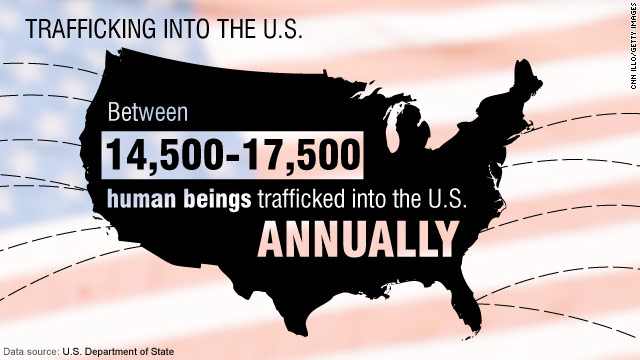
Forced labor -labor trafficking- is not just something that happens overseas, but right here in our own backyards. Every year as many as 17,500 people are trafficked to the United States from over 50 countries worldwide, of which 80 percent are female and 50 percent are children. This shocking figure only notes one side of the the evil face of modern slavery as the number of children sexually exploited in the U.S. is as high as 300,000.
The U.S., the Trafficking Victims Protection Act of 2000 (TVPA) defines labor trafficking as:
“The recruitment, harboring, transportation, provision, or obtaining of a person for labor or services, through the use of force, fraud or coercion for the purpose of subjection to involuntary servitude, peonage, debt bondage or slavery.”Labor traffickers use forms of coercion such as violence, threats, and lies to force victims to work against their will. The most common types of labor trafficking include industries which employ those such as domestic servants, hotel staff, restaurant workers, farm workers, or factory workers. Victims of labor trafficking in the U.S. have been identified all across the country in urban, suburban, and rural areas.
If you suspect a case of labor trafficking please call the National Human Trafficking Resource Center (NHTRC) hotline at 1-888-3737-888. The NHTRC operates 24 hours a day, seven days a week, every day of the year.
Subscribe to:
Posts (Atom)